CHIANG MAI TO THE GREAT WALL OF CHINA
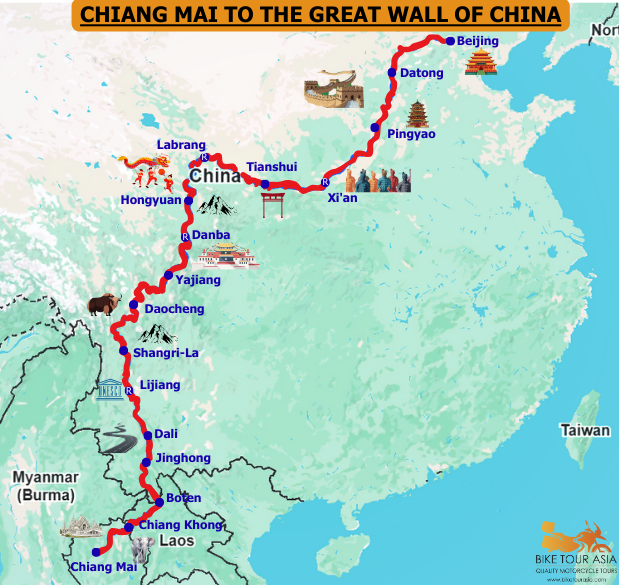
This 25-day motorcycle expedition takes you from Chiang Mai to the Great Wall of China and finally Beijing, crossing Thailand, Laos, and China on an unforgettable 5,300+ km journey. You'll ride through Tibetan highlands, Silk Road cities, and breathtaking mountain landscapes, visiting five UNESCO World Heritage Sites along the way: a true once-in-a-lifetime adventure.
Thailand, Laos, Tibet/China
25 Days
5,300 KM
From $11,765
Start in Chiang Mai/Finish in Beijing
Chiang Mai/Beijing
165 - 510 KM Daily
5 Rest/Cultural Tour Days
SCHEDULED DEPARTURES
- 2 - 26 May 2027 (Booking Available)
- 7 - 31 May 2028 (Booking Available)
*Note that a minimum of 5 riders is required to confirm this tour. In the case of a tour not proceeding due to numbers any deposits will be refunded or transferred to another tour or your choice. Tour confirmation 90 days from start date.
Due to Driving License Regulations in China, participants on all China itineraries are required to be under 70 years of age as of the final riding day or date of exit from China.
HIGHLIGHTS
- Riding through timeless Northern Laos
- Visiting the silk route towns of Dali and Lijiang
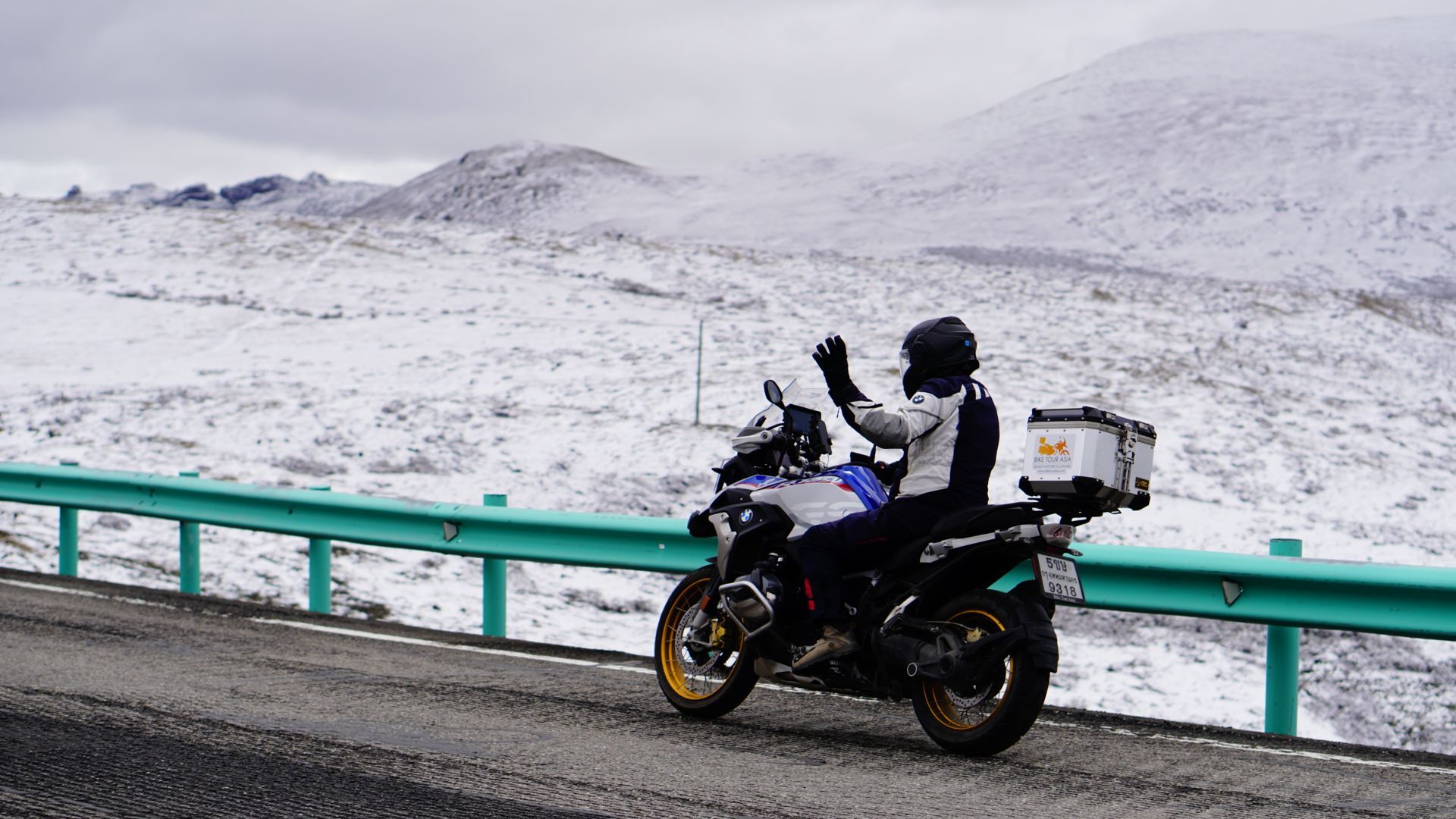
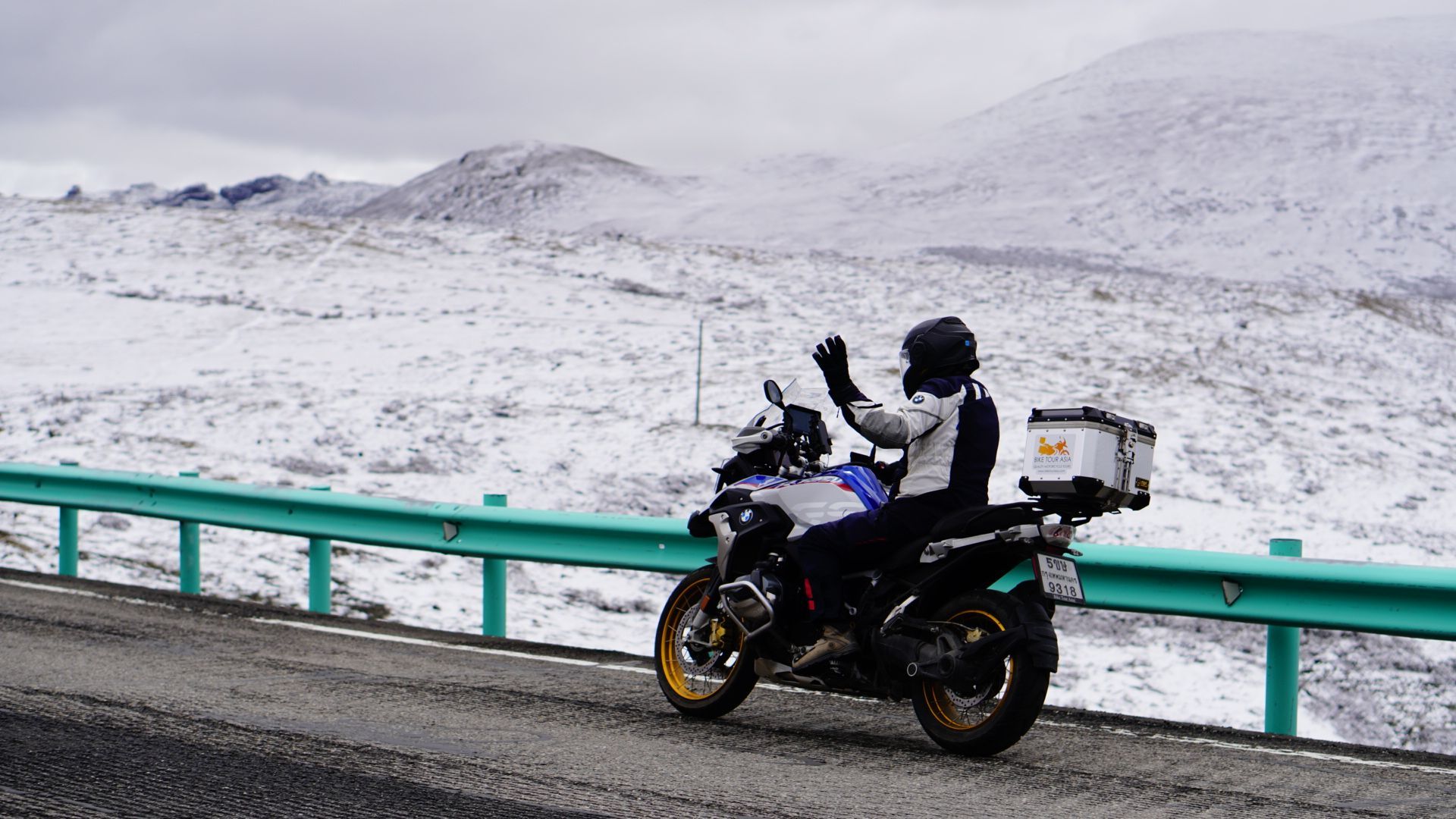
- Entering Tibet and crossing several passes above 4000 meter
- Exploring the Tiger Leap gorge and enjoying the atmosphere of Shangri-La
- Visiting the culturally rich Kham region
- Experience authentic Tibetan hospitality
- Visiting Labrang Monastery and Xi’an (UNESCO World Heritage site) and the Terracotta Army,Yungang Grottoes
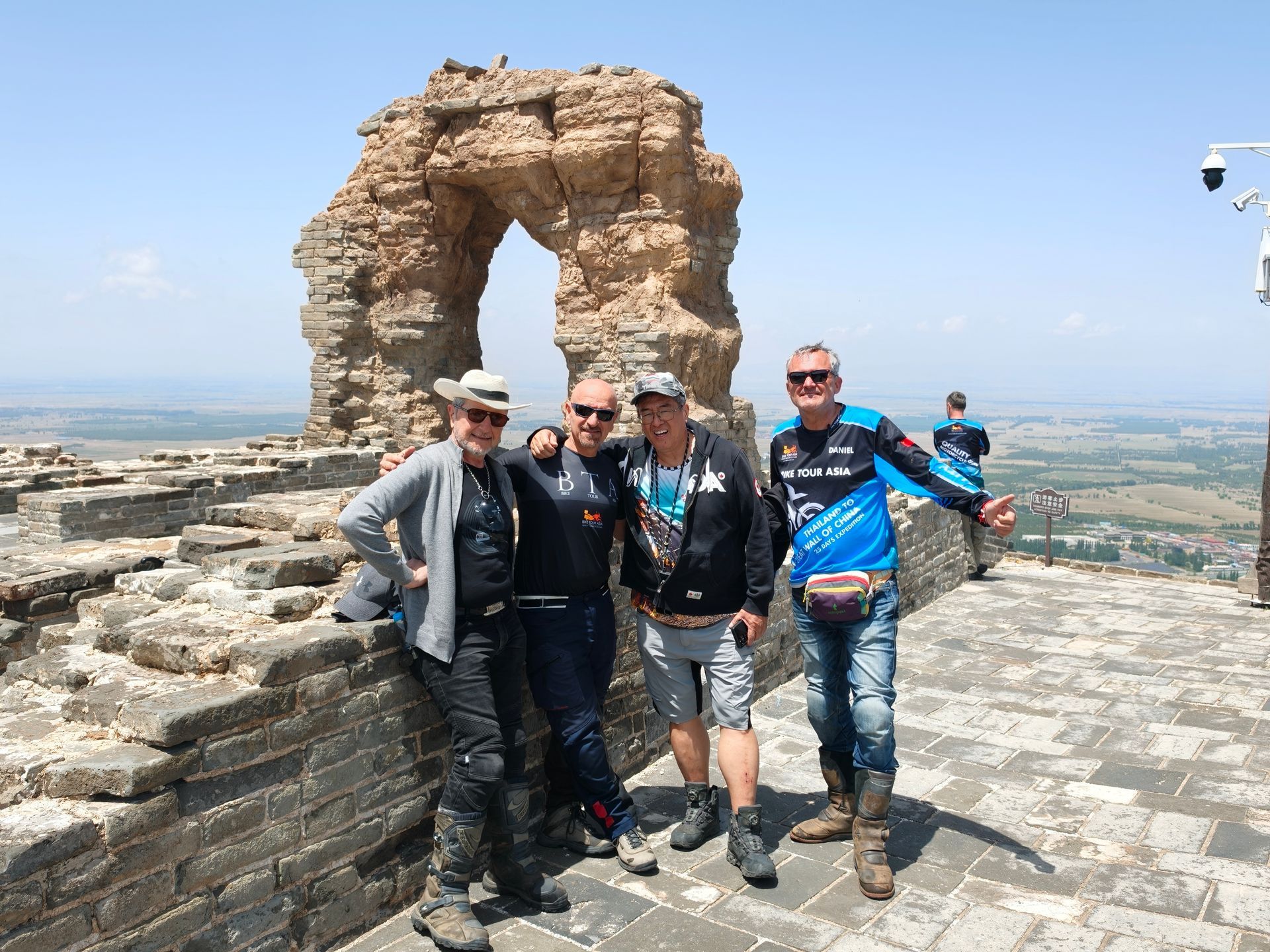
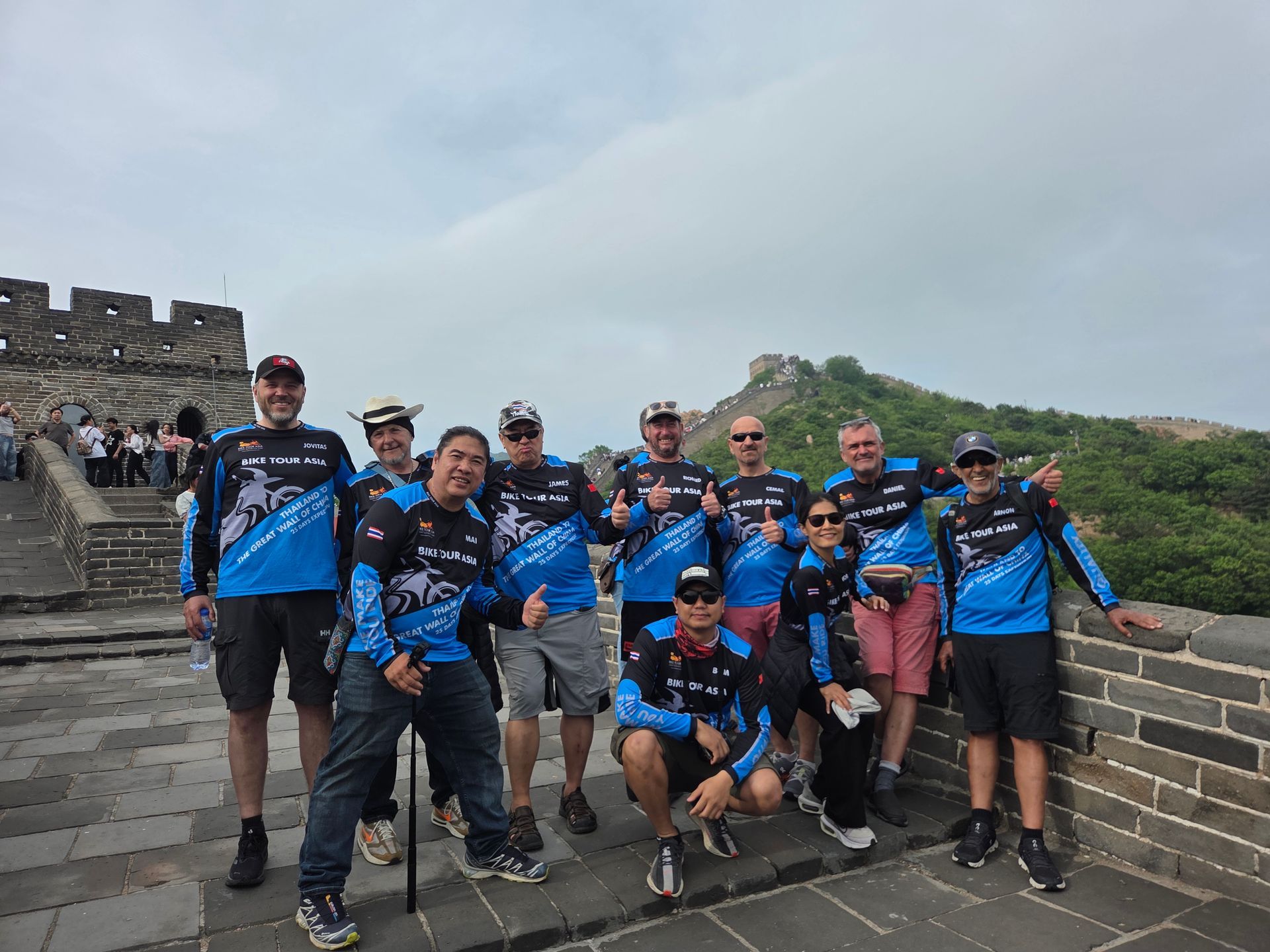
- Walking the Great Wall of China and exploring Beijing’s cultural landmarks like Forbidden City, Temple of Heaven.
Laos Road Conditions
Laos road conditions vary significantly: major routes in urban areas are often in good condition. Rural and mountainous areas have partly poor-quality roads with potholes, mud, and landslides. This is especially valid in Northern Laos. Traffic is partly chaotic and many trucks are over loaded. While riding motorcycle in Laos, slow down, “expect the unexpected”, be prepared to get dusty.
Remarks
The roads are mostly easy to ride but there are some steep and technically demanding stretches. You must be able to handle a motorcycle and do not expect to learn how to ride while on this tour. Every riding day is designed in such a way that there is time for relaxing, dining and sightseeing.
OVERVIEW - DAY BY DAY SCHEDULE
Phase 1: Thailand, Laos, and Lijiang in China (Days 1–8)
Day 1 / Pre Ride Day Chiang Mai (Thailand)
Scenic Foothills & Mekong River Gateway
Arrival Chiang Mai International airport no later than 1 PM.
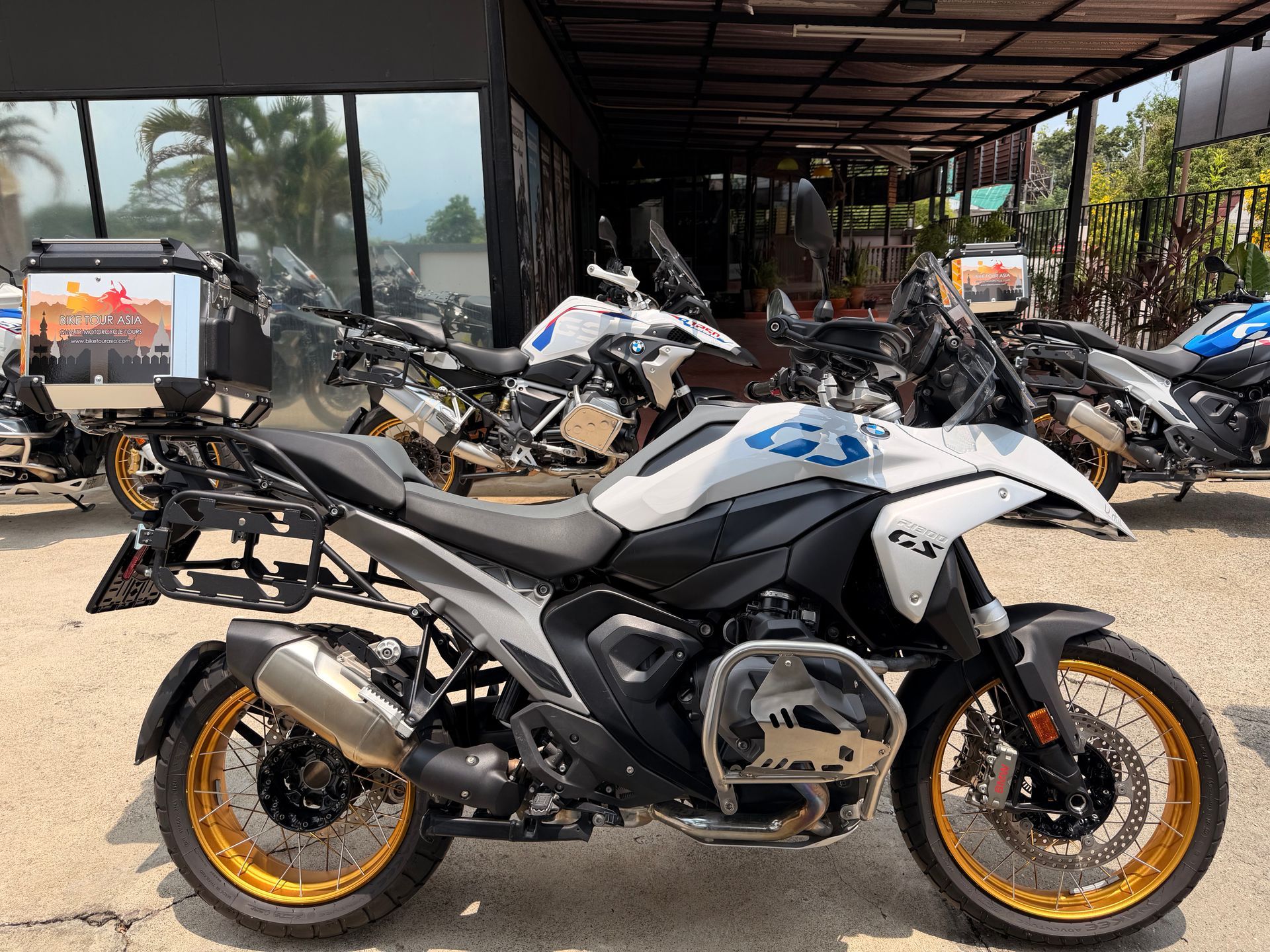
Upon arrival at Chiang Mai airport, transfer to hotel. At 3 PM transfer to Bike Tour Asia for a welcome briefing, answer any questions you might have and motorcycle hand over. Short motorcycle ride back to hotel. Kindly bring riding gear with you. Please plan your arrival to Chiang Mai accordingly. Overnight in Chiang Mai.
Day 2 / Chiang Mai – Chiang Khong (Thailand)
Border Crossing & Rural Laos Riding
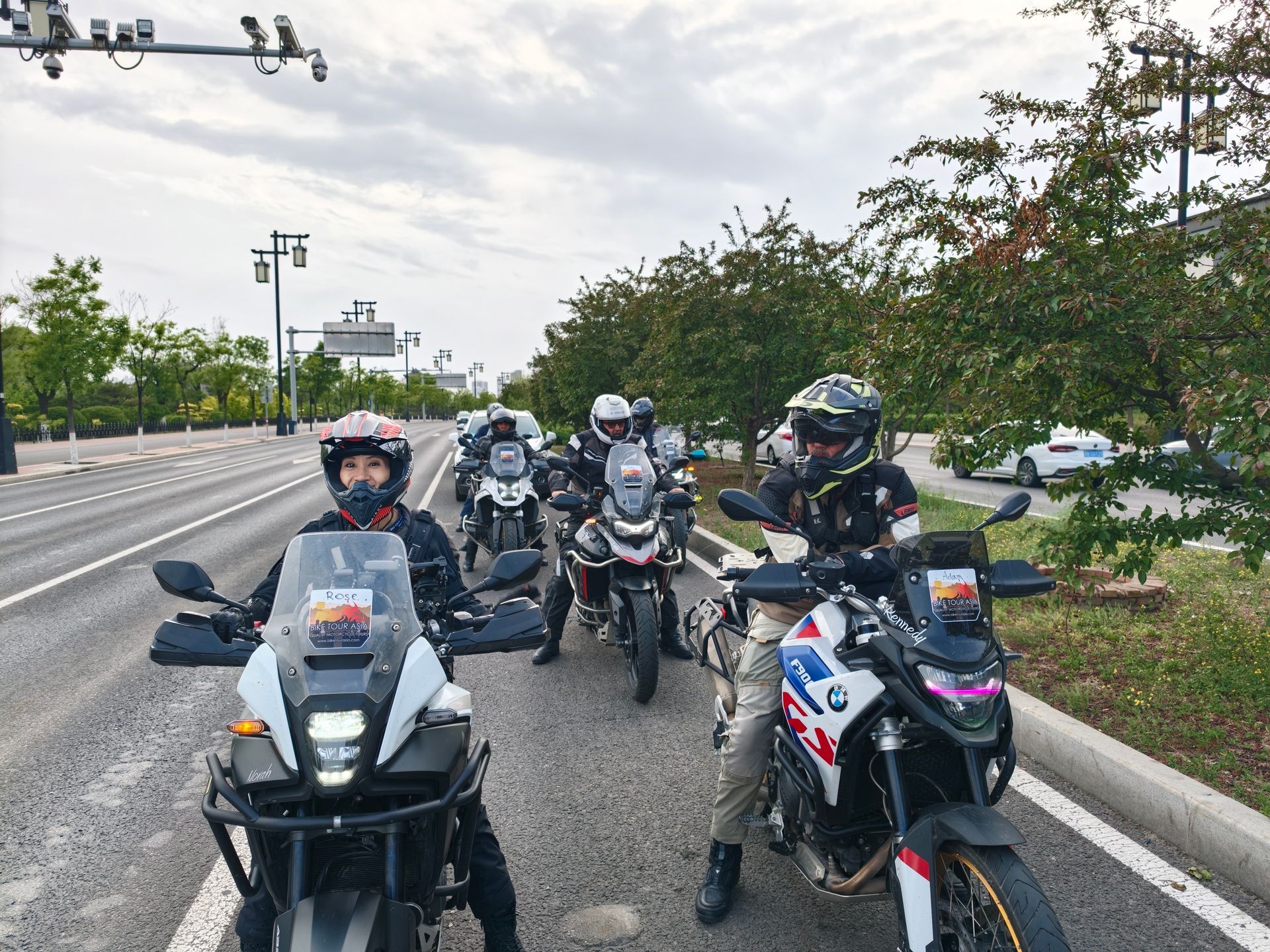
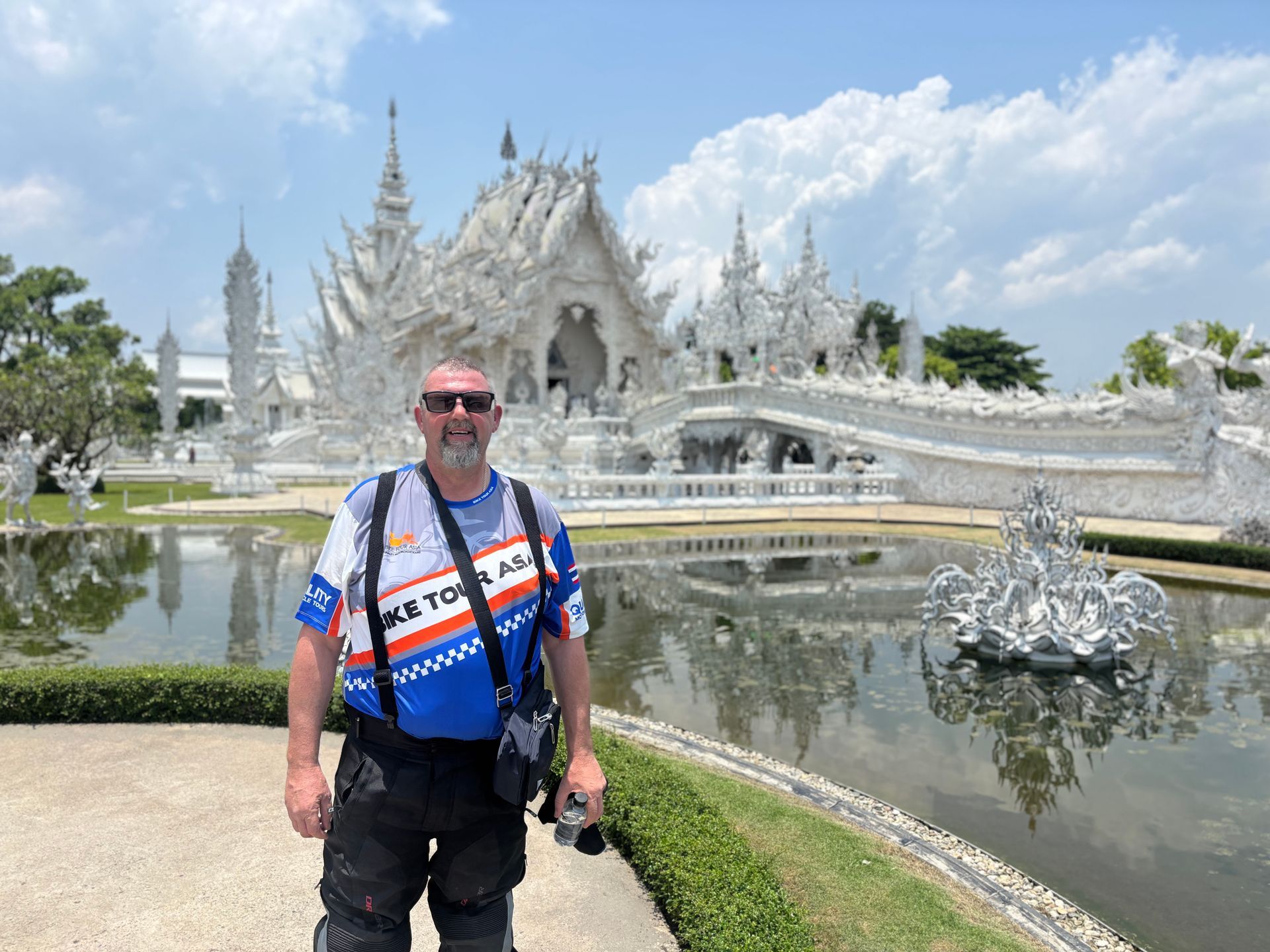
First day of riding we are heading north on mostly four lane roads. It’s a great way for everyone to get familiar with their motorcycle and the local riding environment. Roads we are riding are in good shape with normally low traffic density. Lunch at the Nam Suay Dam, enjoying the view and authentic Thai food. During early afternoon when getting close to Chiang Rai you take some back roads to Wat Rong Khung (White Temple), the remarkable temple which is today recognized as one of the main attractions all over Thailand. Park your motorcycle and take a stroll inside the temple. There are plenty of coffee shops around the temple. From the temple we continue towards the Mekong River and Chiang Khong, which is our end destination of the day. Dinner by the Mekong River. After dinner, take a stroll towards the local pub and enjoy a night cap. Overnight in Chiang Khong.
Mekong River, 4500 km long (3400 miles). 12th Longest River in the work, third longest in Asia, after Yangtze (3rd in the world) and Yellow River (6th in the world).
Originates in Tibetan Plateau, flows through Southwest China, Myanmar/Laos/Thailand/Cambodia and flows into South China Sea south of Saigon in Vietnam. The extreme seasonal variations in flow and the presence of rapids and waterfalls in the Mekong make navigation difficult.
Distance: Approx. 300 km

Day 3 / Chiang Khong – Boten (Thailand/Laos)
Forest Roads & Mountain Villages
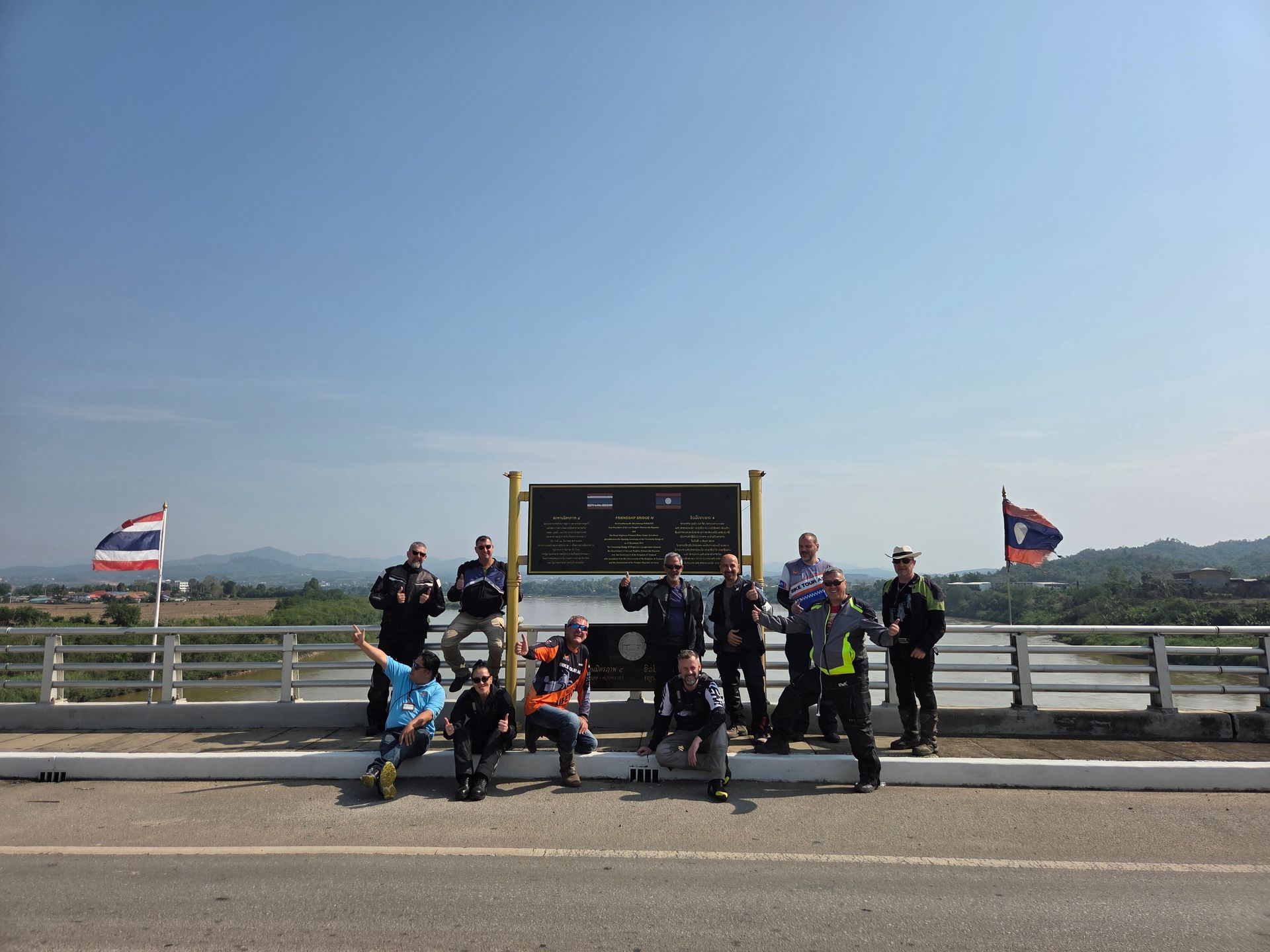
First stop is the Thai Immigration. After clearing Thai border formalities, we cross the Thai – Lao Friendship Bridge. On the Loa side our Lao tour guide greets us, helps us with the border formalities. The immigration- and customs procedures are always an experience. It simply just takes time, so relax, be patient.
Don’t forget! In Laos, we drive on the right side of the road! We have lunch at a local restaurant and then continue the remaining stretch to Luang Namtha. The road is quite good and the scenery is great as we are passing through a couple of villages, where is time to stop and “mingle” with the locals. In one of the villages we will visit a school, play a bit with the kids, donate school equipment, pencils, note books etc. It’s a humbling experience.
The riding stretch today is the main transit road between Thailand and China and normally has a bit more traffic. We expect to reach Boten late afternoon, check in to our hotel. There is plenty of time to explore this artificial Laotian town. Overnight Boten.
Boten is a border town in northern Laos, within Luang Namtha Prpvince, that serves as a major hub on the border with China. Known for its history as a Chinese-invested casino town, it experienced a boom-and-bust cycle before being revitalized as a transport and economic center thanks to the Boten-Vientiane railway. The town is characterized by its strong Chinese influence, with many businesses and services catering to Chinese visitors.
Distance: Approx. 240 km | Overnight in Boten
Day 4 / Boten (Laos) to Jinghong (China)
Customs Clearance & Entry into China
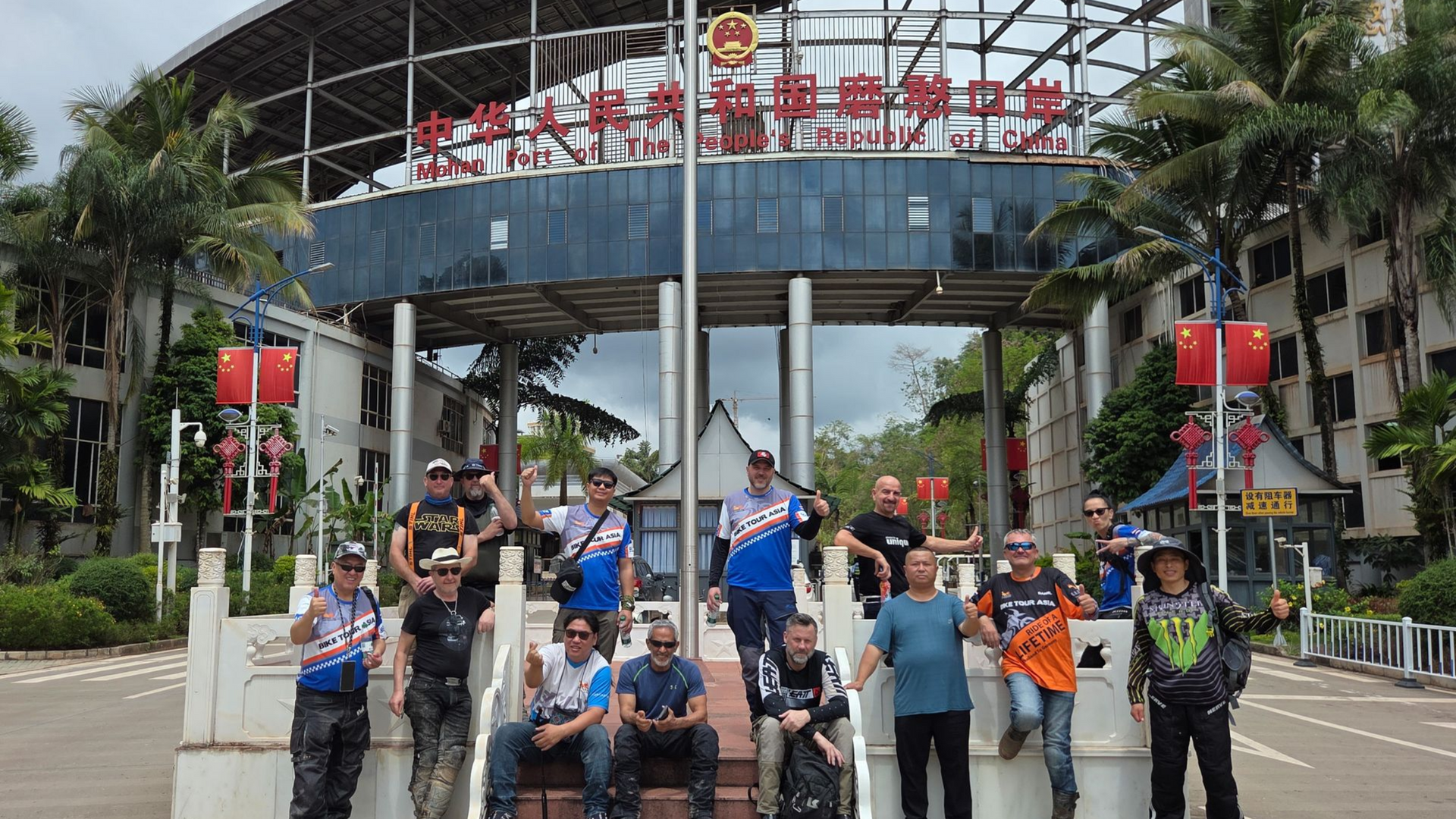
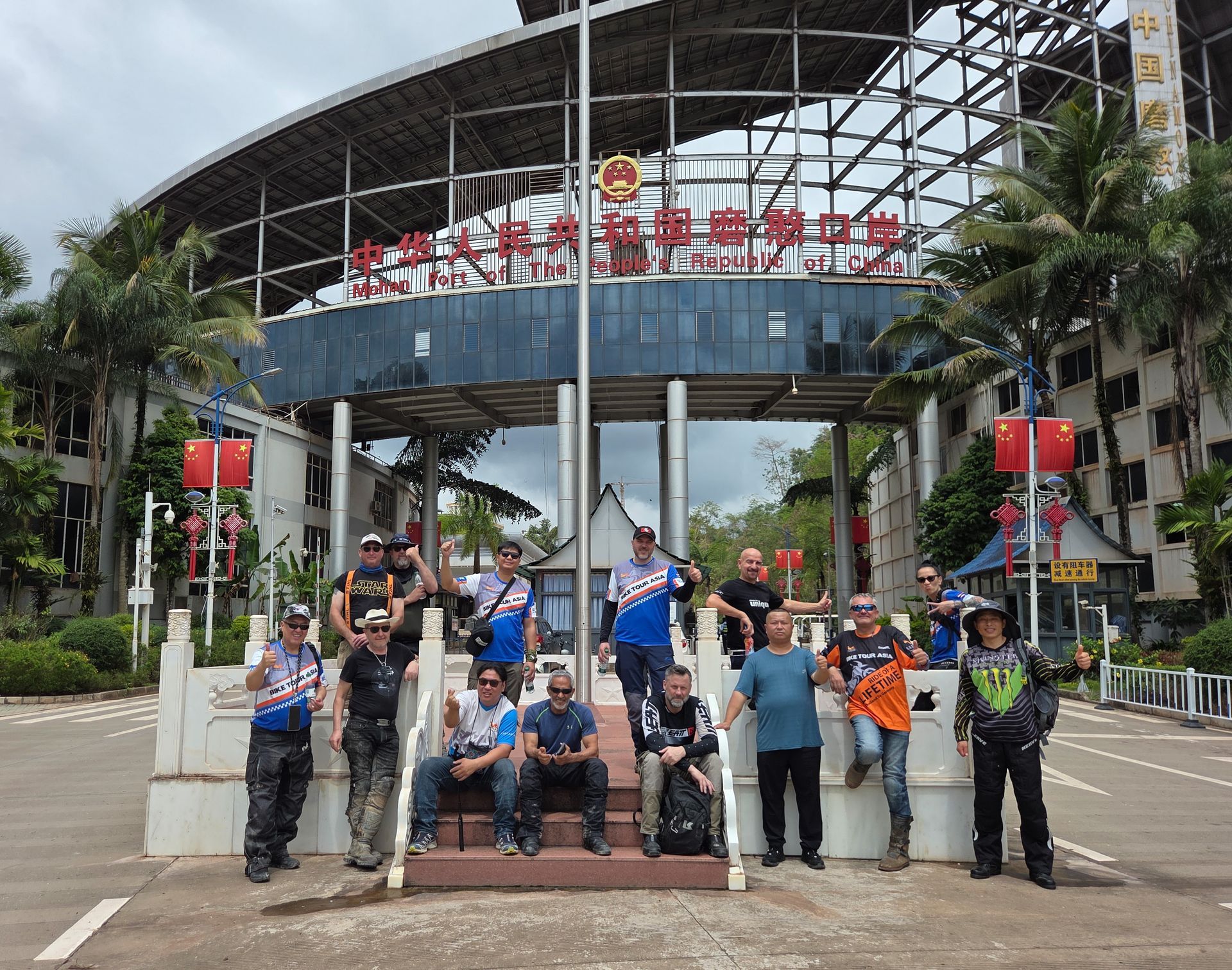
Today we cross from Laos into China. Boten border opens at 07:30 which is 08:30 China time. We expect the Laos side to take about one hour China side about two hours, including custom (luggage check), passport formalities etc.
After completing the Laos departure process, we handle Chinese entry formalities at the Mohan border checkpoint. Once inside China we have lunch next to the border. Here is your best option to buy Chineese SIN card. After lunch we ride to Mengla to visit the regional traffic police office—part of the mandatory process for vehicle inspections and temporary registration for foreign vehicles. We expect this process to take about one hour. Police station takes a rest from 12:00-14:00. We should be at police at 14:00 to get the licenses, it takes one hour.
With paperwork completed, we continue north to Jing Hong, the capital of Xishuangbanna Prefecture. Located along the Mekong River. Jing Hong is a modern city known for its mix of tropical climate, vibrant local markets, and ethnic Dai culture. We arrive in the late afternoon, check into our hotel, and enjoy dinner next to night market by the river. Overnight Jing Hong.
Distance: Approx. 180 km

Day 5 / Jinghong to Jingdong (China)
Rainforest Highways & Pu’er Tea Country
It’s no miss spelling, today we are riding from Jing Hong to Jing Dong…..
We head north from Jinghong, riding a well-maintained highway that winds through lush rainforest and hillside tea plantations. This region is famous for producing Pu’er tea, one of China’s most iconic exports. As we ride, you’ll pass areas that once formed part of the ancient Tea Horse Road—an important trade route that linked China with Tibet, Nepal, and India for centuries.
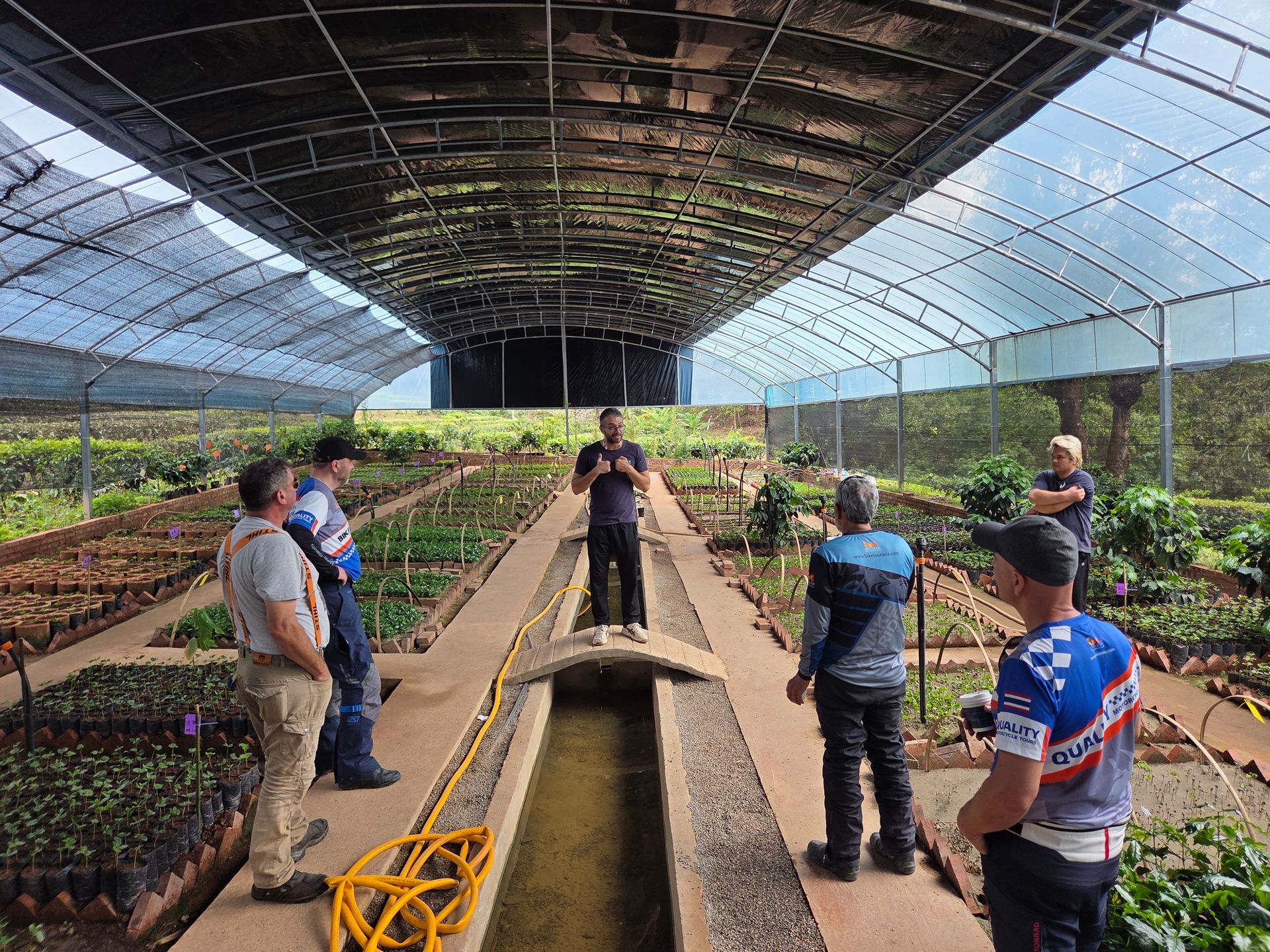
Leaving the highway we ride on the old road and visit Torch coffee plantation. Coffee plantations are new in this part of China. The climate is ideal for coffee cultivation.
Our destination is Jing Dong, a growing market town home to several of Yunnan’s ethnic minority communities. Thanks to new highway access, this once-remote area is now developing quickly while still retaining its cultural roots. Overnight in Jing Dong.
Distance: Approx. 380 km

Day 6 / Jingdong to Dali (China)
Ancient Kingdoms & Historic Trade Routes
Our first stop of the day is Weishan an old trading post from the Tang Dynasty (618-907). Later, the town began large-scale construction in Yuan Dynasty (1271-1368). It was changed to the brick town during the Ming Dynasty (1368-1644) and it kept the styles and features until today. We will park at the North Gate and stroll around the old town.
Today’s ride brings us to Dali, one of Yunnan’s oldest and most culturally significant cities. Once the center of both the Bai Kingdom and the later Kingdom of Dali (8th–12th centuries), this area has seen centuries of trade, conflict, and cultural exchange. In the 19th century, Dali was also the epicenter of a major Muslim rebellion, a conflict that deeply affected the region and claimed over a million lives throughout Yunnan Province.
Despite its turbulent past, Dali remains remarkably well preserved. The old walled city is full of traditional Bai architecture, cobblestone streets, and a relaxed atmosphere that invites exploration.
We stay overnight in the Old Quarter allowing for plenty of time to enjoy Dali at your own pace. Overnight Dali.
Distance: Approx. 220 km
Altitude 1,900 meter

Day 7 / Dali to Lijiang (China)
UNESCO Sites & Mountain Roads
We begin the day with a visit to the famous Three Pagodas of Dali—iconic structures that have stood for over 1,000 years and remain a symbol of the region’s ancient Buddhist heritage. We then ride out the valley and start a short climb to visit Shaxi tea horse caravan village. It’s a lovely road snaking its way over the mountain.
Shaxi started as a trading point for tea and horses during the Tang dynasty (618–907). The prosperity of the town was at its height during the Ming and Qing dynasties (1368–1912).
It is probably the most intact horse caravan town on the Ancient tea route leading from Yunnan into Myanmar and Tibet and is now being preserved through a cooperation between the Swiss Federal Institute of Technology of Zurich and the Peoples’s Government of Jianchuan County.
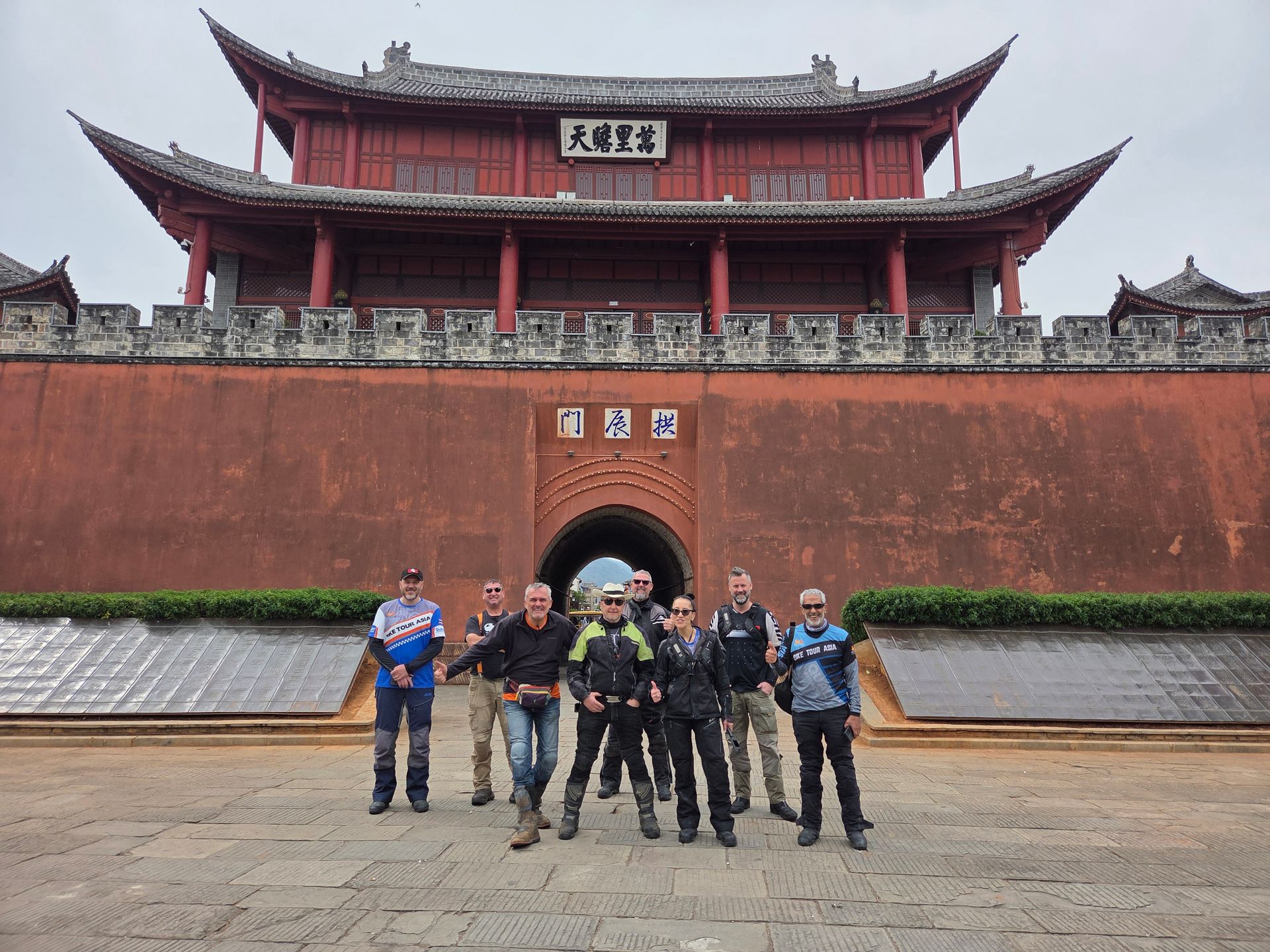
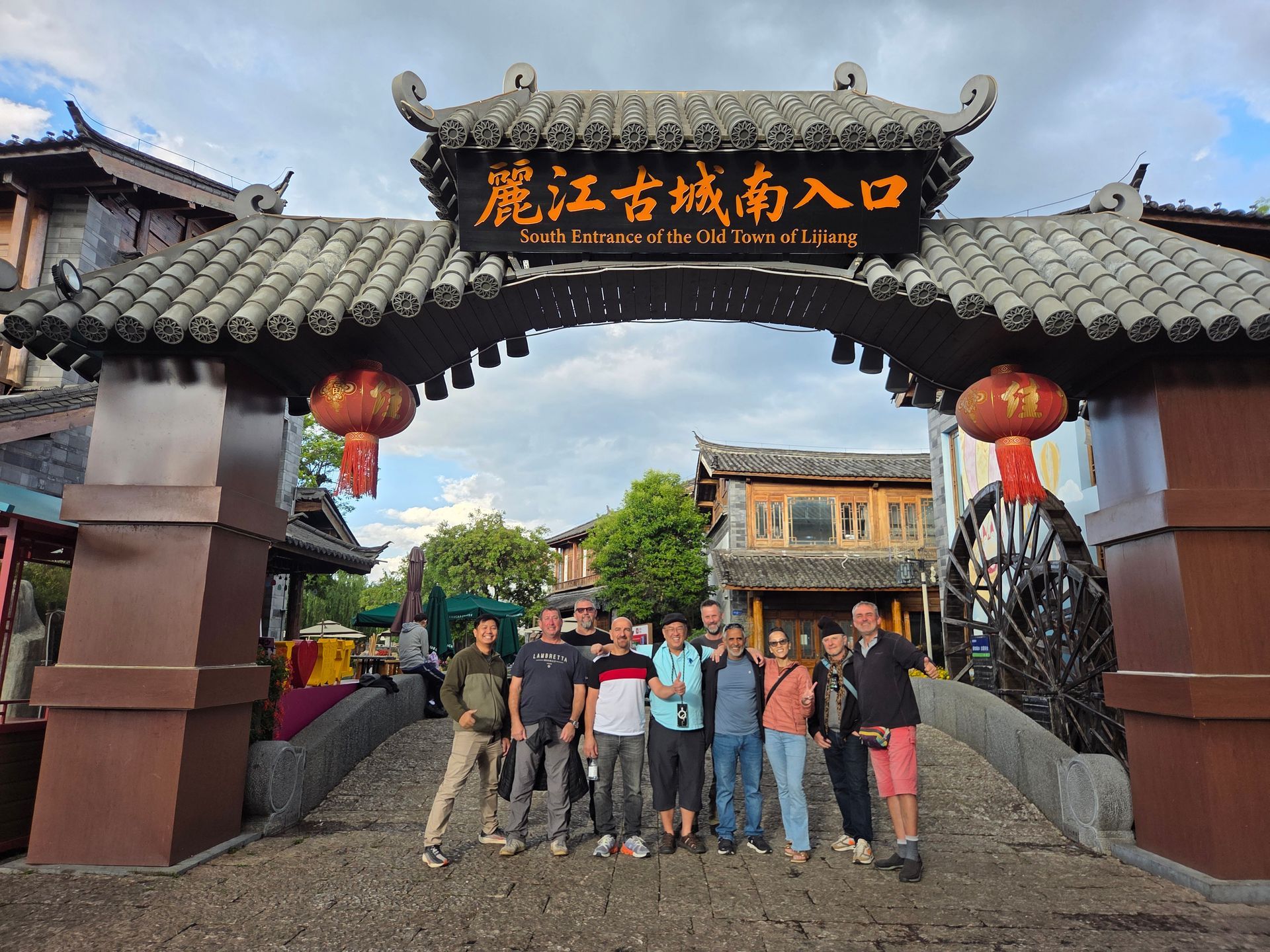
Our end destination is Lijiang, a beautifully preserved UNESCO World Heritage site known for its winding canals, traditional Naxi architecture, and cobbled streets. The ride offers a mix of scenic views and curving roads, with plenty of photo opportunities before we arrive in the late afternoon and settle into the Old Town.
The Baisha Old Town was the political, commercial and cultural center for the local Naxi people and other ethnic groups for 450 years from the year 658 AD to 1107AD. The Dabaoji Palace of the Baisha Fresco, very close to the Baisha Naxi Hand-made Embroidery Institute, was built in the year 658 AD in the Tang dynasty (618 AD to 907 AD).
In ancient times, the Baisha Old Town used to be the center of silk embroidery in the southwest of China and the most important place of the Ancient Southern Silk Road, also called the Ancient Tea and Horse Road or Ancient tea route. The Ancient Southern Silk Road started from Myanmar, crossed Lijiang, Shangri-La County in Tibet, continued through Iran, the Fertile Crescent before finally reaching the Mediterranean.
Distance: Approx. 220 km
Altitude 2,400 meter

Day 8 / Lijiang (Rest Day) (China)
Exploring Lijiang’s Old Town
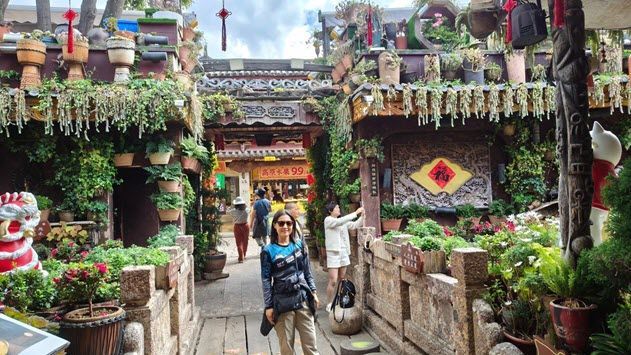
Today is a rest day, giving you time to explore Lijiang at your own pace. A UNESCO World Heritage site, the Old Town of Lijiang is known for its network of cobbled streets, flowing canals, and stone bridges—many dating back to the Ming Dynasty.
This is a great opportunity to walk the lanes, discover local crafts, sample Naxi cuisine, or simply relax in a traditional teahouse. Lijiang is also popular for shopping, with everything from handmade textiles to silverwork and herbal remedies on offer. Our Chinese guide will share his favorite scenic spots and eateries with us.
You can also take an excursion out of town, take the cable car up to the summit station @ 4’506 meter of the Jade Dragon Snow Mountain (Est. 140 CNY) Bring your passport and warm clothes.
In connection enjoy the spectacular Impression Lijiang, a spectacular open-air cultural performance set against the majestic backdrop of the Jade Dragon Snow Mountain. The show features over 500 local ethnic minority performers who celebrate their heritage through vibrant songs, dances, and horseback riding. The show takes place on 3,100 meters. Duration is one hour and tickets range between 190 and 280 CNY.
Overnight in Lijiang.
Phase 2: Tibetan Discoveries (Days 9-16)
Day 9 / Lijiang to Shangri-La (China/Tibet)
Tiger Leaping Gorge & Climb to the Tibetan Plateau
Tibet;
Homeland of the Tibetans, also other ethnic groups like Monguls, Hui and more recently Han Chinese. Highest region on earth, average 4380 meters above sea level. Highest mountain, Mt Everest, 8848 meters, border to Nepal.
9th century – Tibetan empire, covered Pamirs, Yunnan and Bengal. Later under Mongul and Chineese patronage. Independent 1912 – 1951. Incorporated into China 1959 after failed uprising.
Today Tibet is divided into, Xizang Autonomous Region and autonomous prefectures within Gansu, Sichuan, Qinghai and Yunnan.
Language – closest cousin, Burmese.
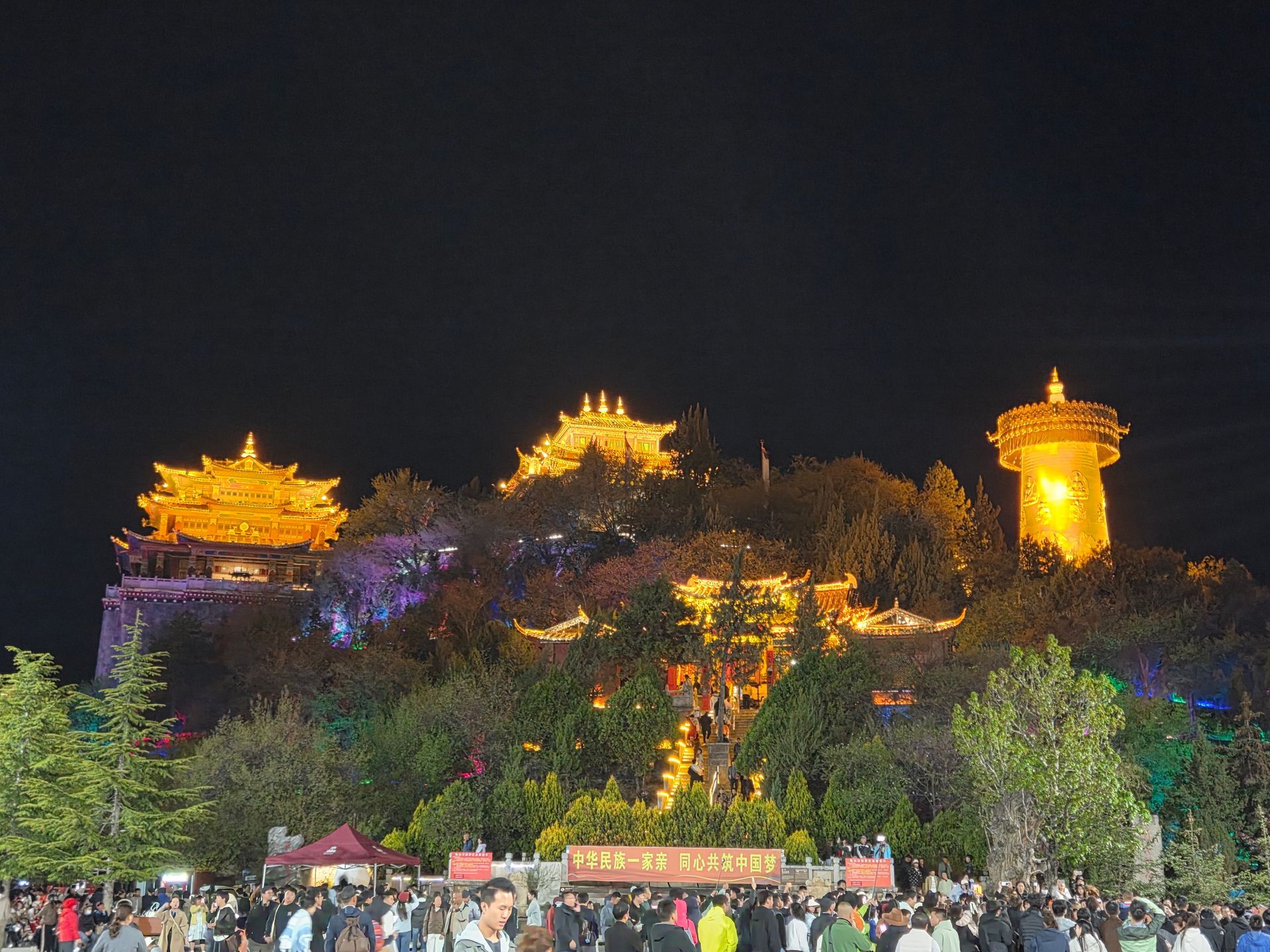
We depart Lijiang and ride toward one of the tour’s true highlights—Tiger Leaping Gorge. Carved by the mighty Yangtze River, this is the forth deepest gorge in the world and a stunning section of road for any adventure rider. The legend tells about a hunted tiger who escaped by jumping 25 meters (narrowest point) using a rock in the middle.
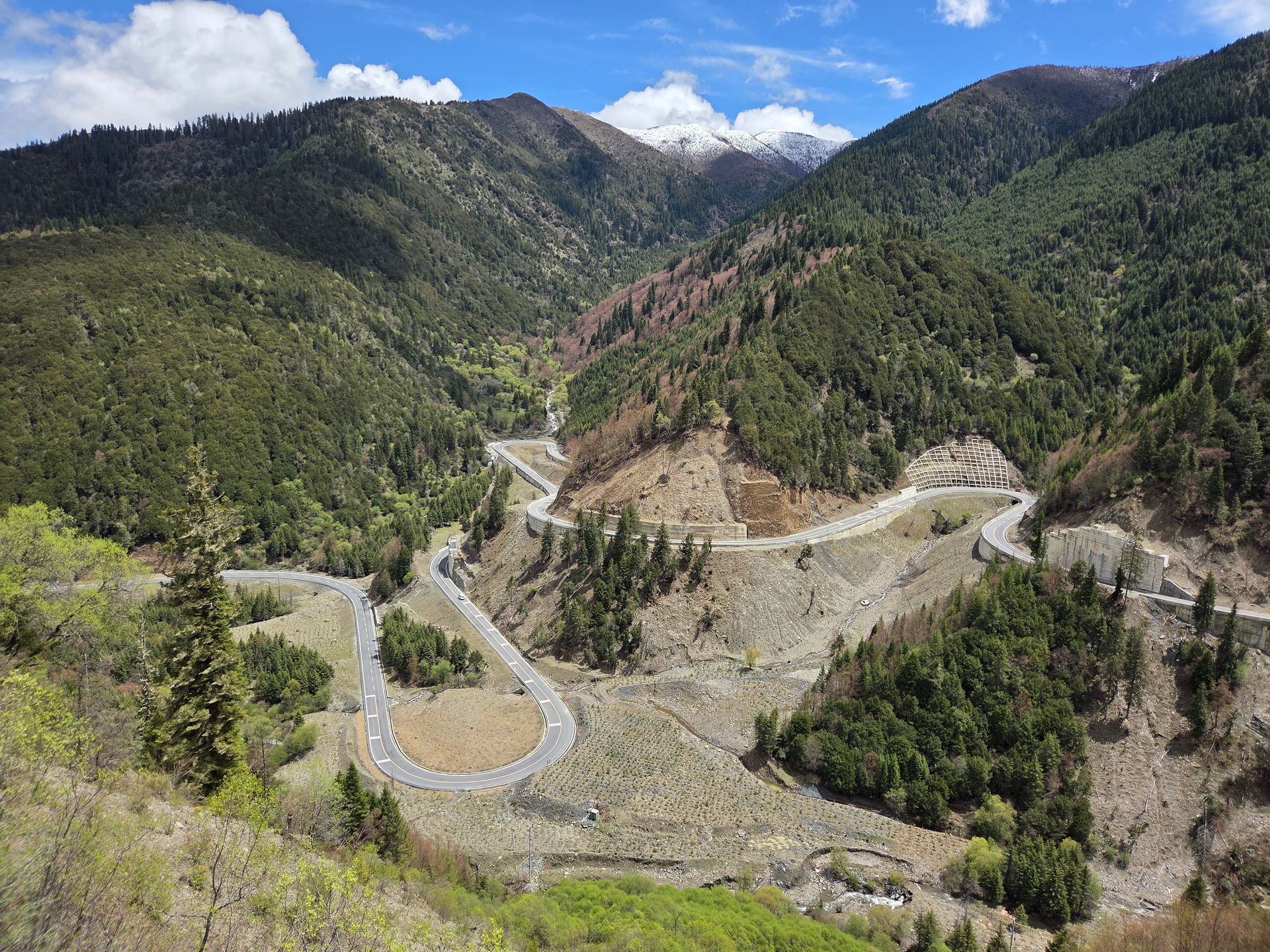
From there, we continue climbing into the mountains, ascending to the Tibetan Plateau. The ride to Shangri-La takes us along a modern mountain road that offers sweeping views and changing landscapes as we enter a region where Tibetan and Chinese cultures converge. We climb over a 3719-meter pass. At over 3,000 meters above sea level, Shangri-La marks our arrival at the gateway to Tibet.
In the evening we enjoy a walk through the “old” town.
Distance: Approx. 350 km
Altitude 3,300 meter

Day 10 / Shangri-La to Daocheng (Tibet)
Into Sichuan’s Tibetan Frontier & the Kham Region
We continue deeper into the Tibetan world today, riding north into Sichuan Province and the culturally rich Kham region of Eastern Tibet. The route follows the Dinchu River through remote valleys and dramatic gorges shaped by Yangtze River tributaries.
After passing through the town of Xiangcheng, we climb out of the valley into the Hendun mountain range where the air thins and the scenery becomes increasingly rugged. We overnight in Daocheng, a Tibetan frontier town with comfortable accommodations and a noticeable shift in atmosphere and altitude.
Distance: Approx. 300 km
Altitude 3,850 meter.

Day 11 / Daocheng – Yajiang (Tibet)
High Passes, Grasslands & Glacial Landscapes
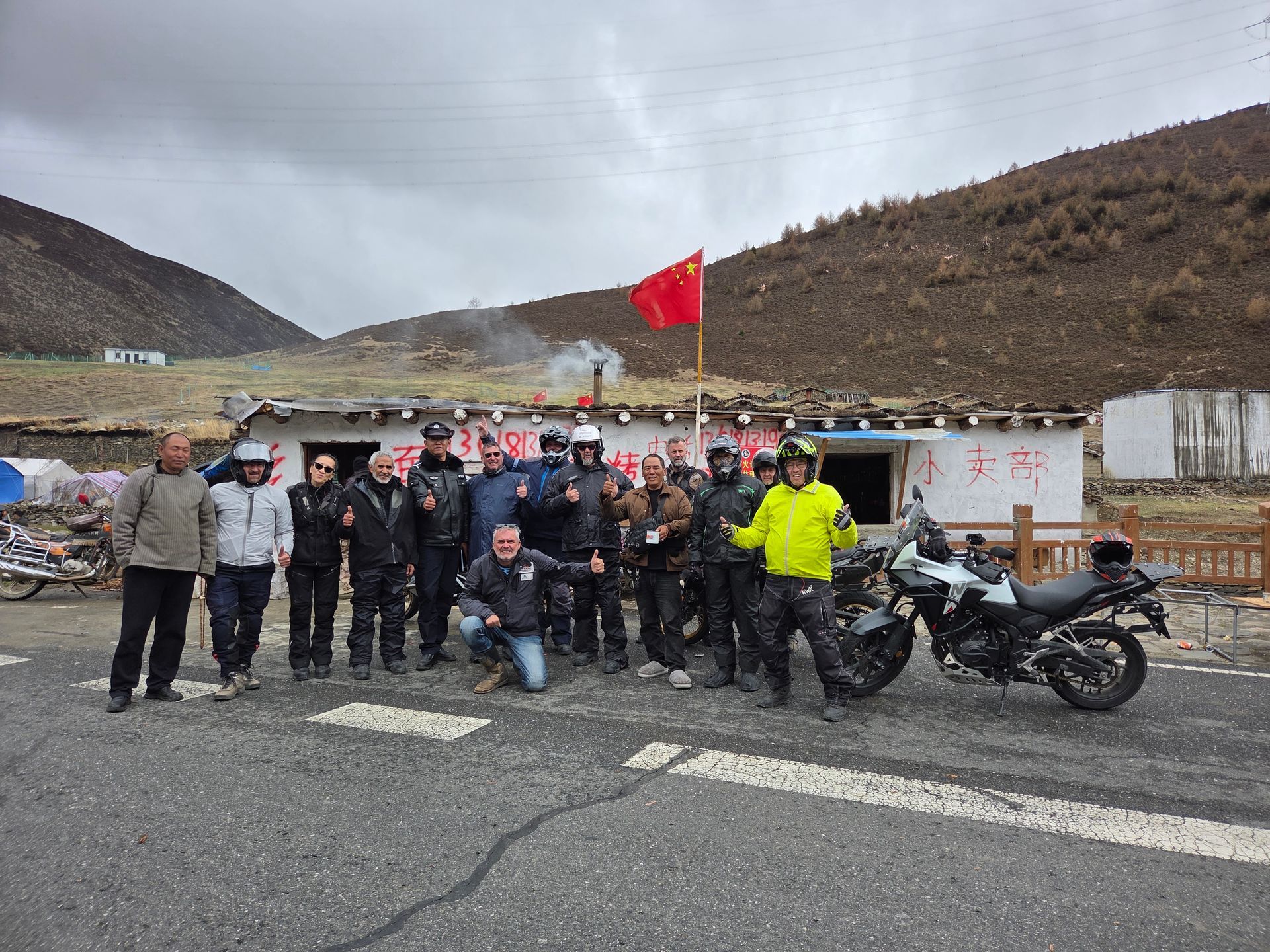
Today’s ride takes us across some of the highest terrain of the journey reaching 4700 meters. We begin with a climb over Haizi Mountain and arrive in Litang, one of the highest towns in the world at 4,160 meters. The region is marked by open grasslands, glacial rock formations, and the sight of nomadic herders living in traditional black tents—a rare and memorable part of the Tibetan experience.
After refueling in Litang, we ride even higher—crossing a mountain pass at approximately 4,600 meters—before descending into Yajiang, a town nestled along the Yarlung River. It’s a demanding but incredibly rewarding day of riding with panoramic views and significant elevation changes.
Distance: Approx. 310 km
Altitude 2,800 meter

Day 12 / Yajiang to Danba (Tibet)
Tibetan Villages, Mountain Passes & Cultural Immersion
Today we have a bit shorter riding day ahead of us. We continue through the Yarlung River region along a scenic road framed by traditional Tibetan houses, pasturelands, and terraced hillsides.
We stop and visit Tagong Monastery which was built during the Qing Dynasty (1644 to 1911) to honor the journey of Princess Wencheng on her way to Lhasa for her wedding to Tibetan King, Songtsen Gampo. It houses the replica of the sacred statue of Jowo Sakya-muni Buddha at Jokhang Temple in Lhasa along with scriptures of the Sakya Buddhist sect and other cultural relics more than 10,000 years old.
Our ride takes us over Yala Pass—another high mountain crossing with expansive views of mount Yala at an altitude of 5,820m in, The mountain is covered with snow all year round. Mount Yala is worshiped by Tibetan people as the area’s patron saint. The Yala river sprouts from the Yala Mountain and merges with the Dadu river up ahead, before descending into Danba County. Known for its striking watchtowers and strong Tibetan heritage, Danba is often referred to as the “Valley of Beauties” due to its historical association with the Tibetan Qiang culture.
Distance: Approx. 210 km
Altitude 1,800 meter

Day 13 / Danba (Rest Day) (Cultural Tibet)
Cultural Immersion & Tibetan Village Life
Danba;
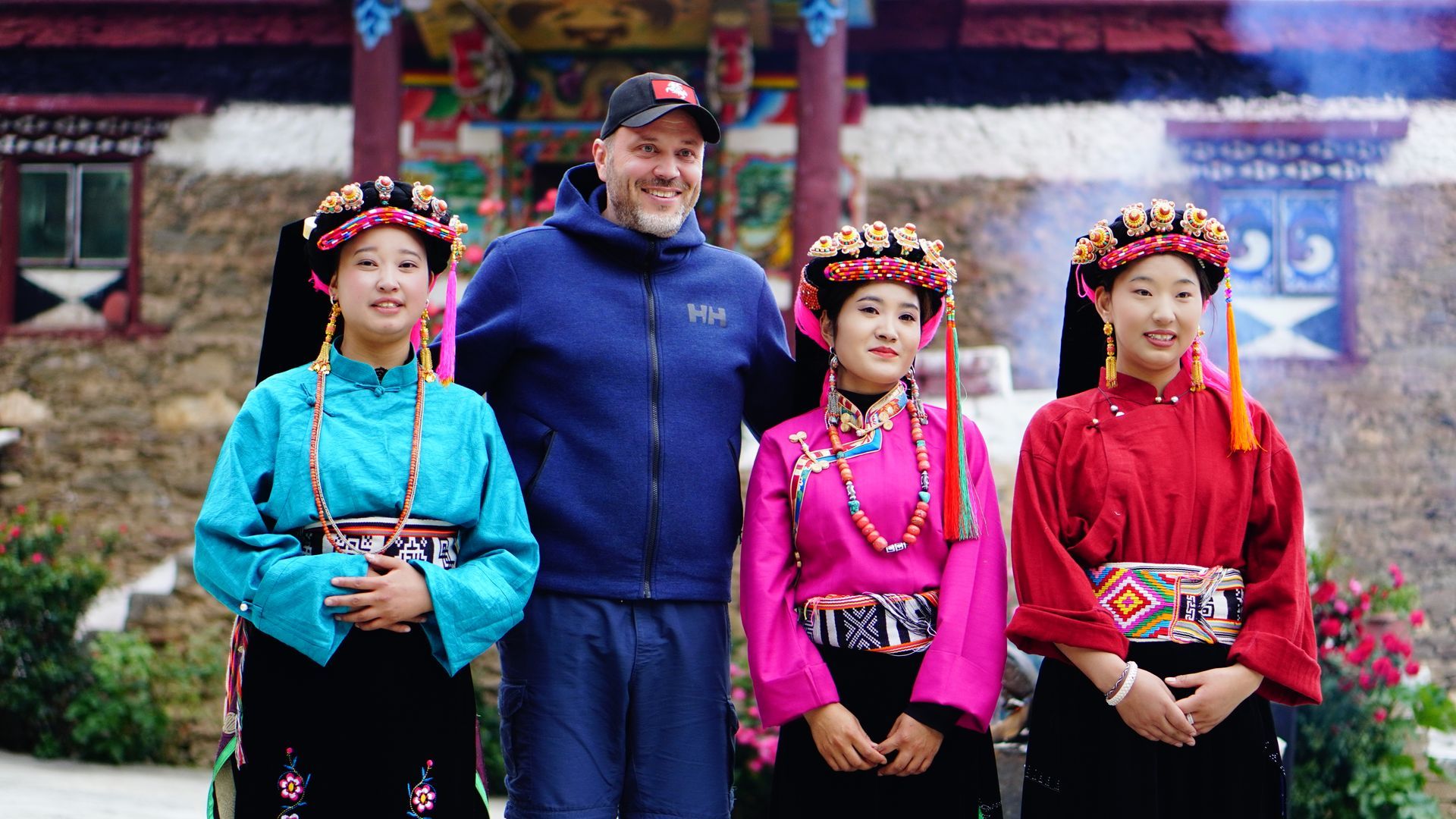
The main residence living in Danba is Jiarong Tibetans. Different from the local Tibetans in Tibet, the Jiarong Tibetans in Danda have their own language and customs. The Jiarong Tibetan language is influenced by Tibetan language, Qiang language, and Han language.
Generally, Jiarong men keep long hairs and wear their traditional clothes in white and green with knives or forks hanging on the left waist. And the Jiarong Titan girls living in Danda are beautiful so that the village is also called the beauty village. Even if they are both Jiarong Tibetans, they have different costumes at different ages in different villages.
Danba is also known as a kingdom of stone castles with hundreds of years of history. The ancient watchtower is made of earth and stone, with a beautiful appearance and a solid wall. Most of the ancient towers are connected to the folk houses, and some of them are also built separately in the flats and valleys. The shape of the watchtower is generally a high-shaped square cylinder: four corners, five corners to eight horns, and a few up to ten triangles. The height is generally not less than 10 meters, more than 30 meters, and the highest is 50 to 60 meters.
Cultural Immersion & Tibetan Village Life
Today is a rest day in Danba, allowing for a deeper cultural experience. With the help of a local village guide, we explore the iconic Danba Towers, ancient stone watchtowers unique to this region and visit nearby Tibetan homes to learn more about daily life, architecture, and traditions.
We shall be picked up from the hotel @ 2 PM and visit the Tibetan village built 1000 years ago on the mountain slopes. Overlooking the valley we shall visit the watch towers, sample a homemade Tibetan meal.
In the evening, you’ll have a chance to sample regional Tibetan dishes prepared by our hosts. Weather permitting, a traditional singing and dancing gathering may be arranged, offering an authentic and memorable end to the day. Overnight Danba.

Day 14 / Danba to Hongyuan
Remote Plateau Ride & Nomadic Encounters
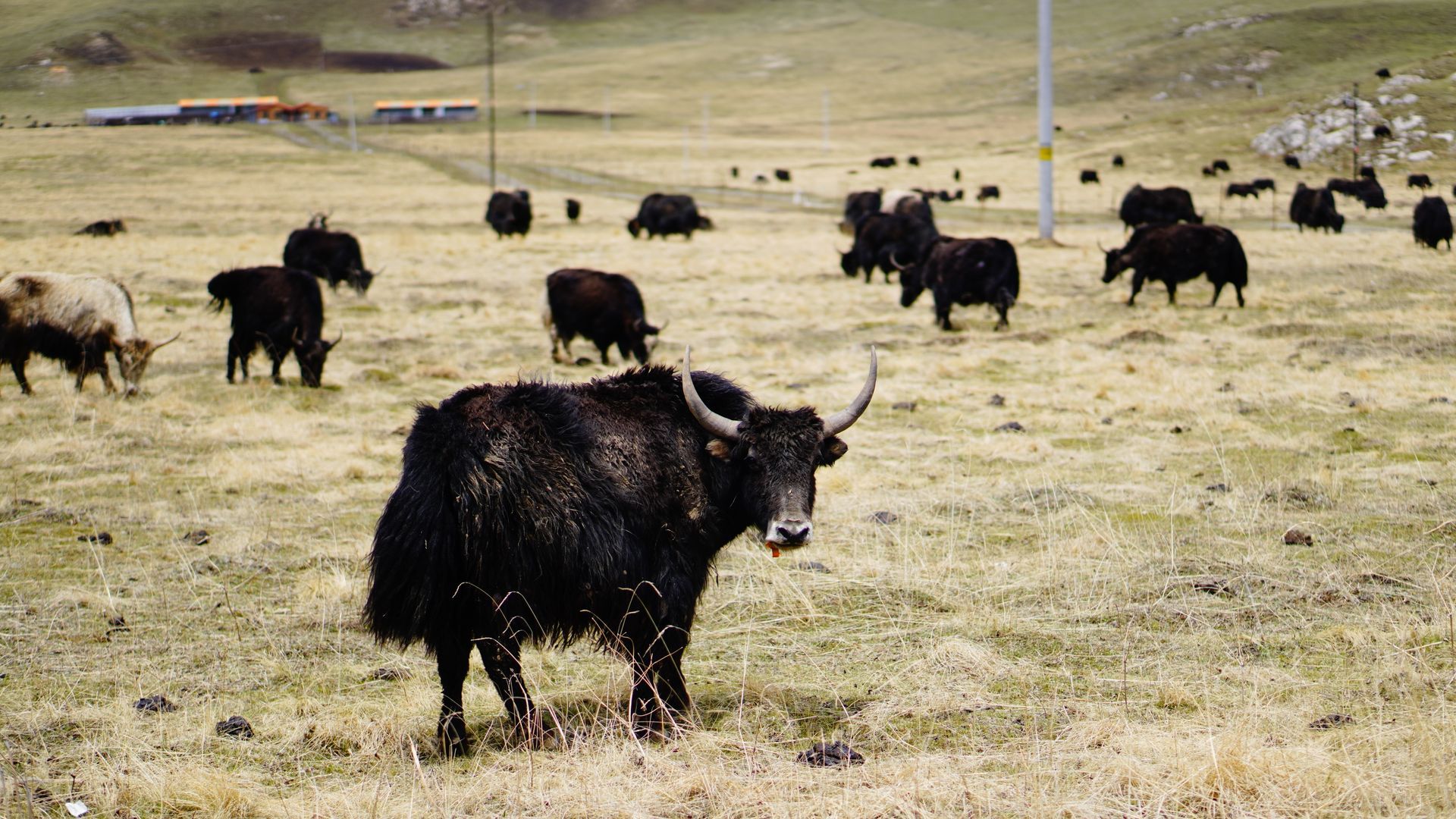
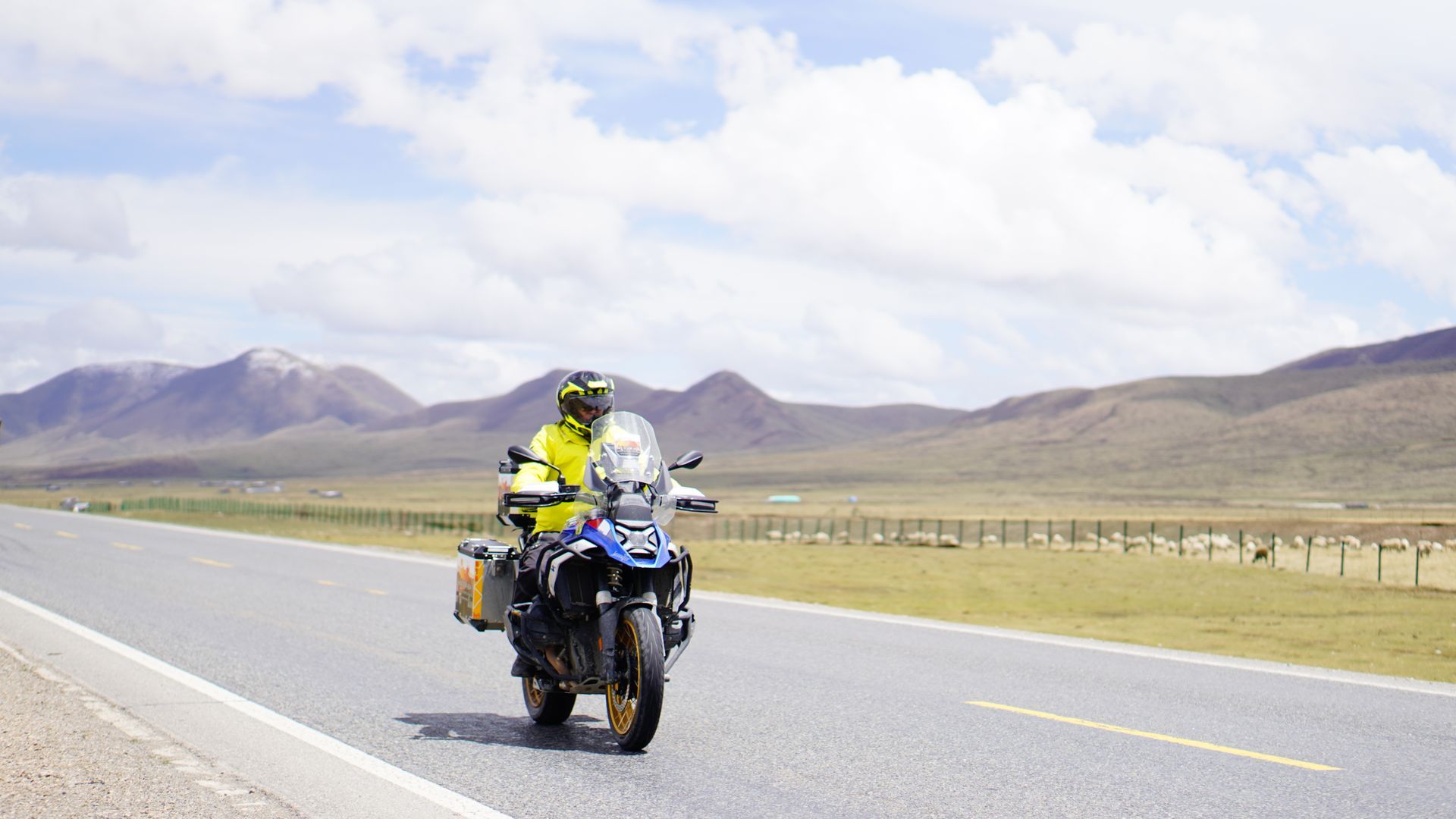
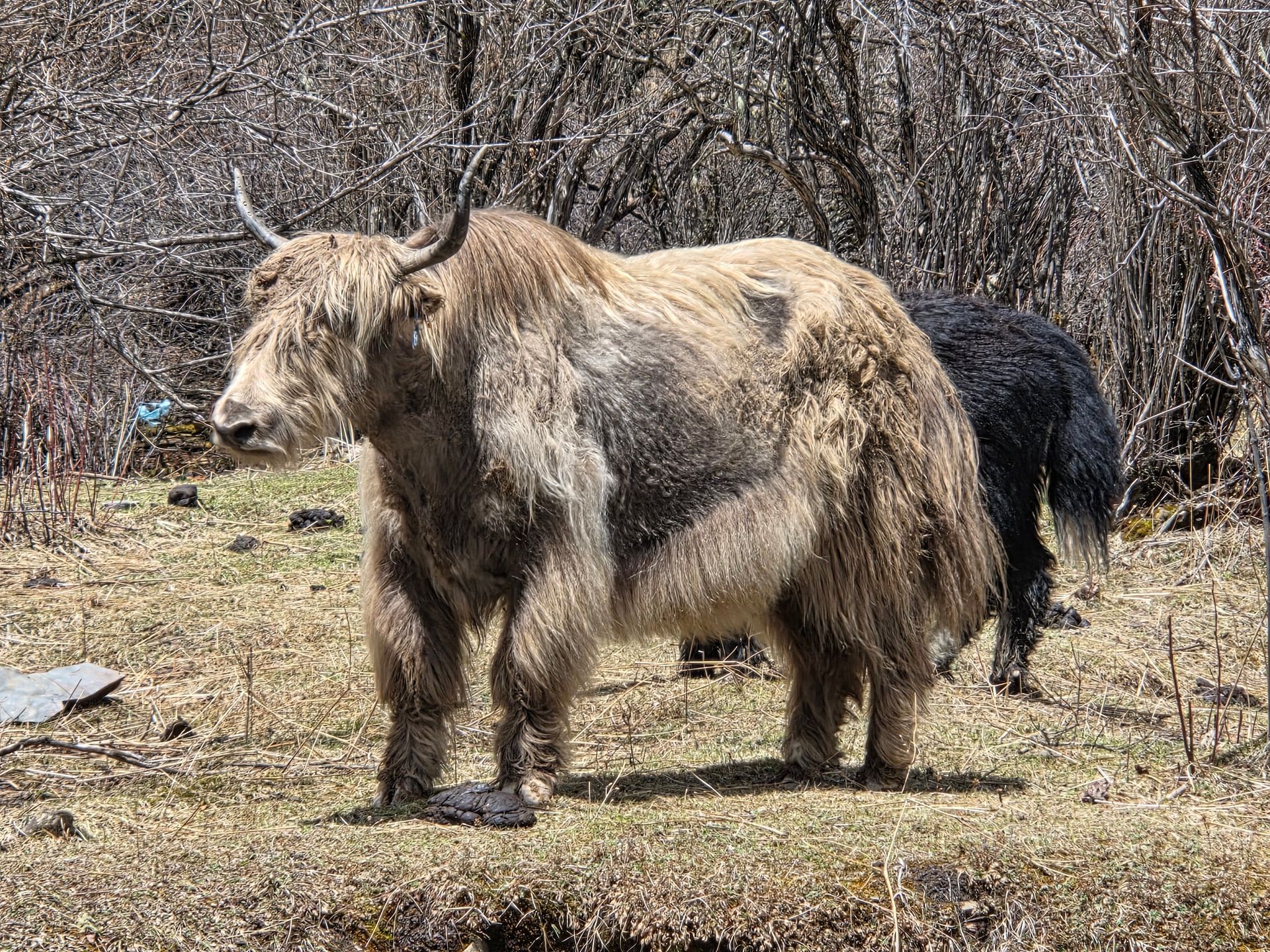
We leave Danba and head deeper into the Tibetan Plateau, riding through vast stretches of open grasslands. This route offers a true sense of isolation—very little traffic, endless horizons, and the occasional encounter with nomadic herders and their yak herds. It’s one of the most remote and untamed sections of the journey, often described as the “wild west” of China. We are reaching altitudes of 4100 meters.
The landscape is raw, expansive, and deeply peaceful—a striking contrast to the mountain roads earlier in the tour. We overnight in Hongyuan, a small town at the edge of this high-altitude grassland region.
The Tibetan grasslands make up one of the largest high-altitude grazing ecosystems on Earth, covering roughly 70% of the 2.5 million square kilometer Tibetan Plateau. Sitting at an average elevation of over 4,500 meters above sea level, these expansive plains are often referred to as the "Roof of the World". They serve as a crucial environment for carbon sequestration, global water systems, and indigenous pastoral life. For thousands of years, these grasslands have been home to Tibetan nomads (Drokpa) whose lives revolve around seasonal pastoralism. Nomads herd domestic yaks and sheep, which function as both primary livelihoods and financial investments.
Distance: Approx. 370 km
Altitude 3,200 meter

Day 15 / Hongyuan to Labrang
High Grasslands, Langmusi Stop & Cultural Convergence in Labrang
Today we continue across the plateau, passing more nomadic settlements and open grasslands. Along the way, we make a stop in Langmusi—a scenic town nestled in the mountains, known for its unique blend of Tibetan and Hui Muslim cultures.
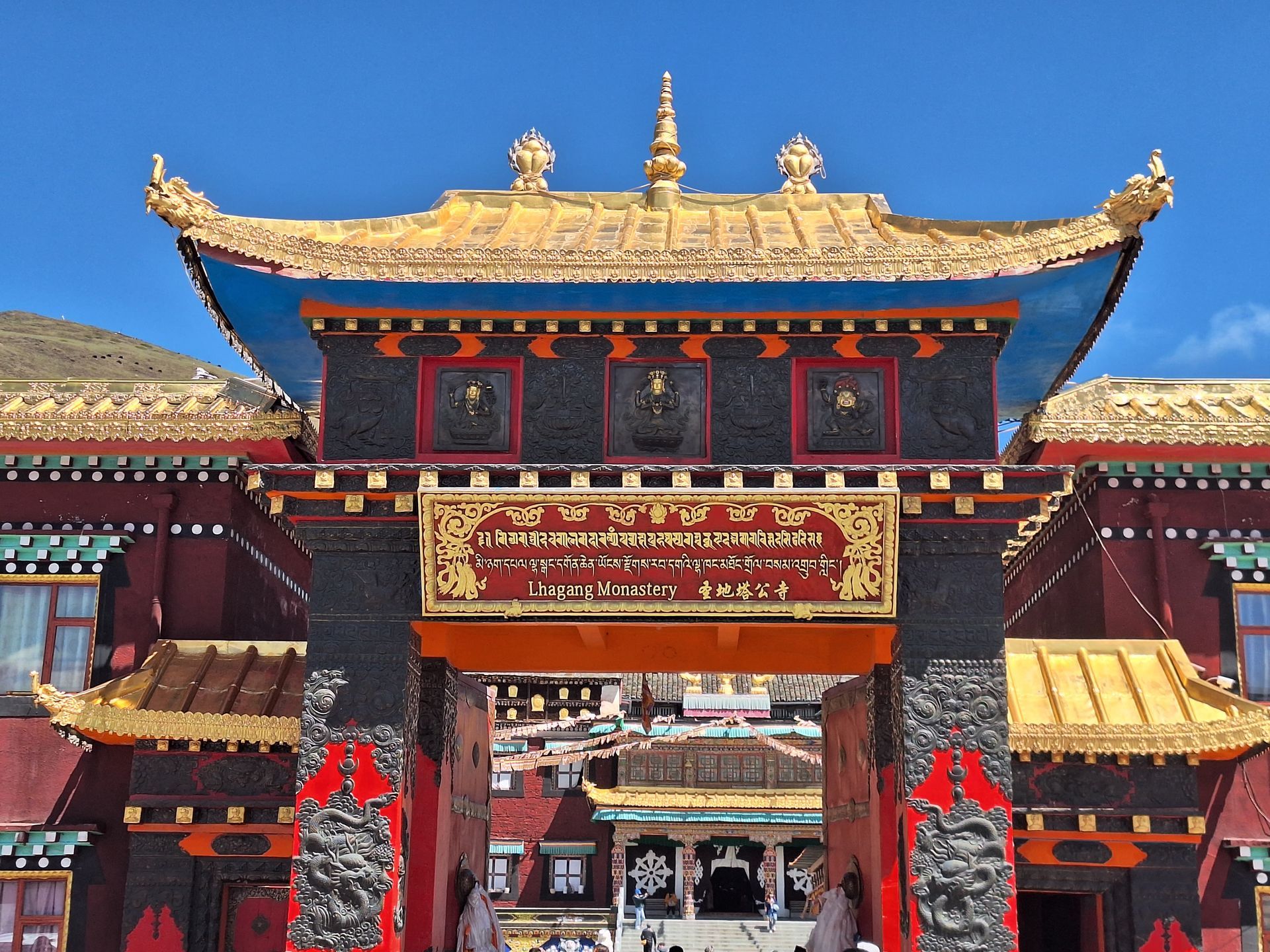
We then ride on to Labrang, a town famed for its large monastery and vibrant mix of Tibetan, Han Chinese, and Hui Muslim communities. The streets are lively with vendors selling everything from sheepskins to prayer beads and farming tools. We stay overnight near Labrang Monastery, one of the most important centers of Tibetan Buddhism outside of Tibet.
Distance: Approx. 380 km
Altitude 3,000 meter

Day 16 / Labrang, China (Rest Day)
Monastic Heritage & Tibetan Culture in Amdo
Today is a rest day dedicated to exploring Labrang Monastery and its surroundings. We will start our visit at 9 AM and will return back to our hotel around 1 PM.
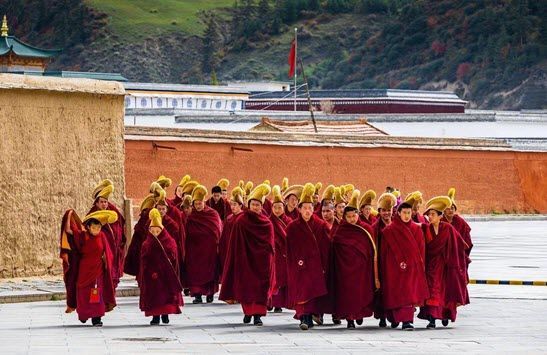
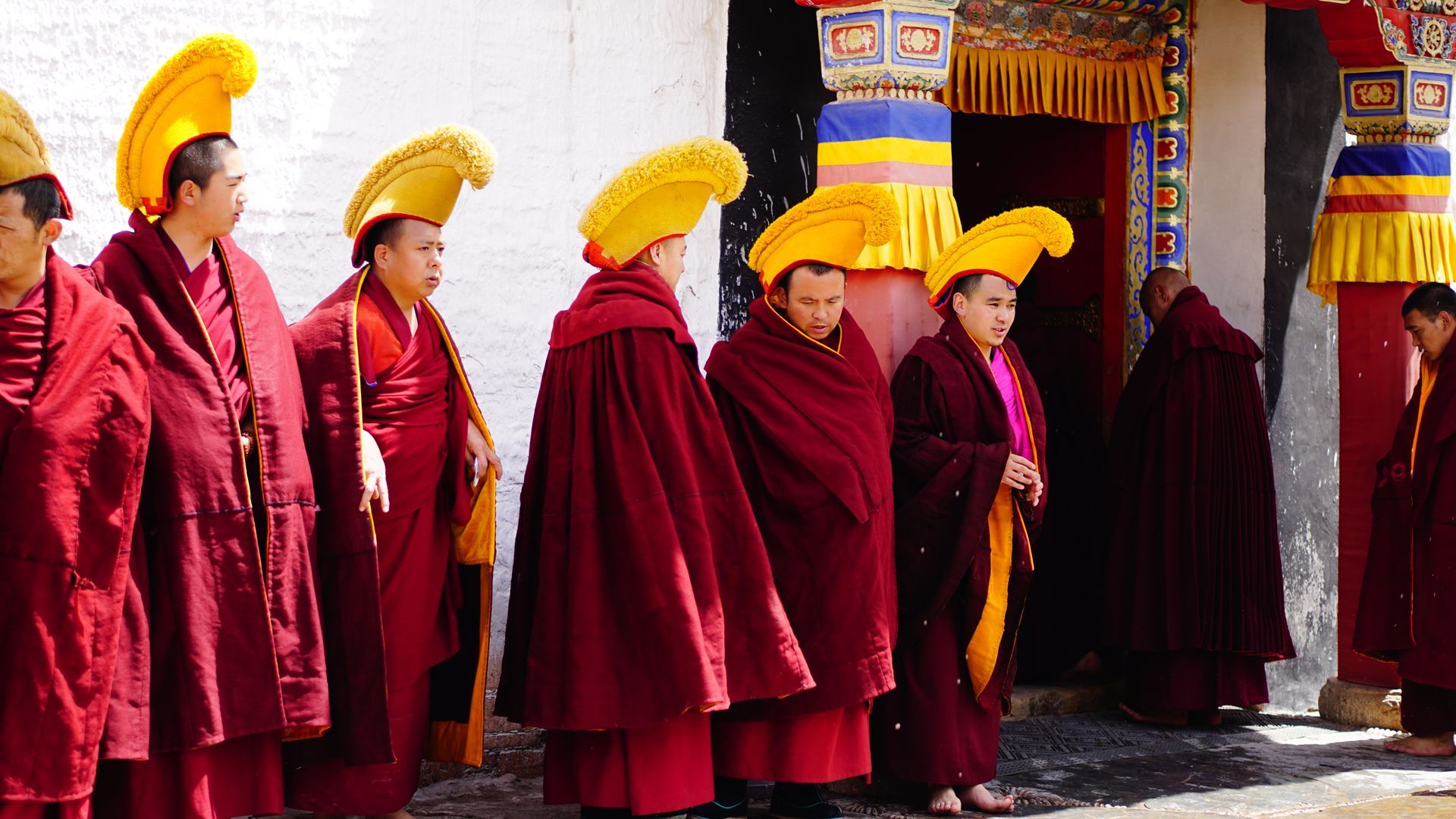
Located in Gansu Province, Labrang is considered the cultural heart of Amdo, alongside the nearby town of Rebkong. The complex features intricate temples, prayer halls, and long corridors of spinning prayer wheels. You'll have time to walk the kora (pilgrim path), observe daily rituals, and experience the vibrant monastic life that defines this historic site.
The monastery was founded in 1709. It is one of Tibetan Buddhism's most important monastery towns outside the Tibetan Autonomous Region.
Labrang Monastery is situated at the strategic intersection of two major Asian cultures, Tibetan and Mongolian and was one of the largest Buddhist monastic universities. In the early 20th century, it housed over 4,000 monks; today, it continues to operate with around 1,500 monks and several hundred lay students. Labrang was also a gathering point for numerous annual religious festivals and was the seat of a Tibetan power base that strove to maintain regional autonomy through the shifting alliances and bloody conflicts that took place between 1700 and 1950.
In April 1985 the Assembly Hall burned down. It was replaced and the new building was consecrated in 1990.
In October 2025, Chinese authorities carried out a four-day raid focusing on the Monastery and surrounding Tibetan villages. The operation included door-to-door searches and the seizure of numerous Dalai Lama photographs, which were considered illegal under local and central regulations. Residents were pressured to hand over these images.
At 2 PM we are offering a short ride around the neighborhood. Planned to return back to the hotel no later than 5 PM.
Ride 0km Alt. 3000m cold 15℃
Phase 3: Central China & the Great Wall (Days17 - 25)
Day 17 / Labrang to Tianshui (Central China)
From Tibetan Highlands to the Heart of the Silk Road
Today we are leaving the Tibetan plateau, in the morning we still have some high altitude grassland scenery, on altitude up to 3600 meter.
Our ride takes is from Labrang to Lanzhou, the capital of Gansu Province and a major hub along the Yellow River. From there, we head east toward Tianshui, an important stop on the ancient Silk Road.
Tianshui, the city is known for its nearby grottoes and Silk Road heritage. According to a legend, the name Tianshui originates from a lake formed from heaven, which would remain the same size year-round.
Distance: Approx. 430 km
Altitude 1,100 meter

Day 18 / Tianshui to Xi'an (China)
Arrival in China’s Ancient Capital
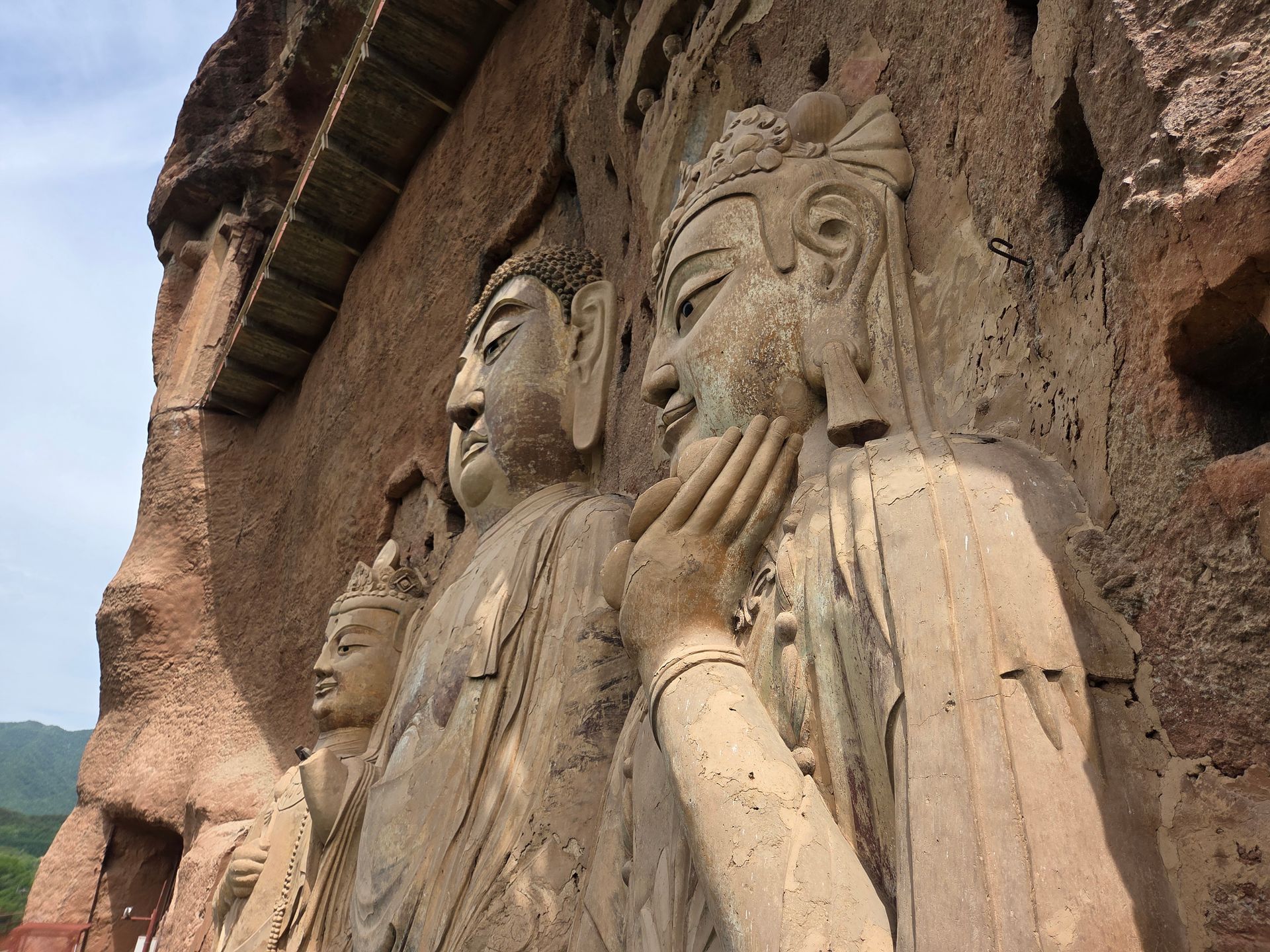
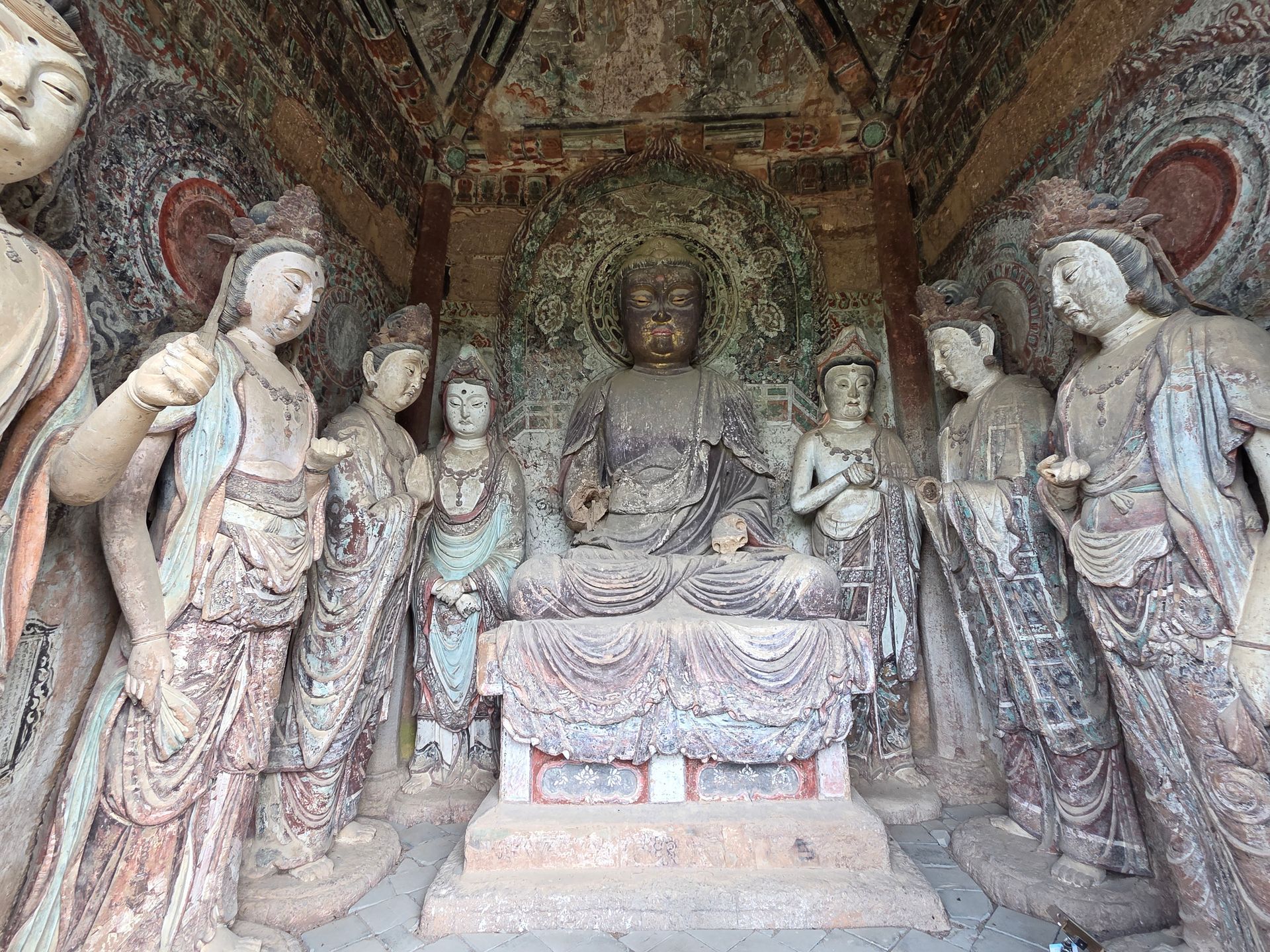
First stop today are the famous Maijishan, a series of 194 rock cut caves cut into the hill. They contain over 7,200 Buddhist sculptures and over 1,000 square meters of murals.
The mountain is formed of purplish red sandstone. Construction of the grottoes began in the Later Qin era (384–417 CE).
The Maijishan Grottoes are just one of the string of Buddhist grottoes that can be found in this area of northwest China, lying more or less on the main routes connecting China and Central Asia. These sites, along with other archeological sites along the eastern Silk Road, were inscribed on the UNESCO World Heritage List in 2014.
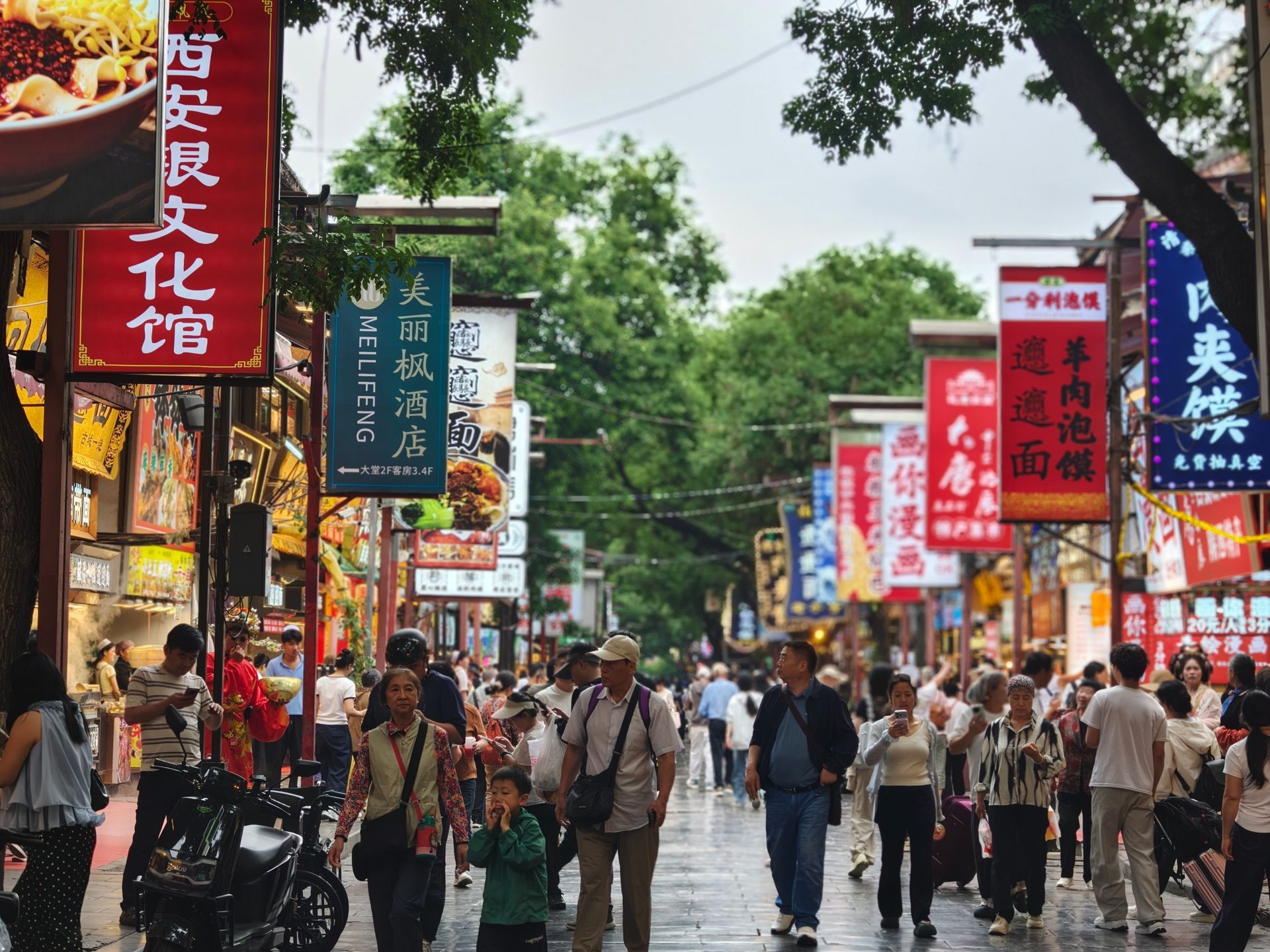
From the Maijishan we take the old road to Baoji, riding along a scenic river and canyon. Remaining ride on the motorway to Xi’an. Xi’an, one of China’s most historically significant cities. As the eastern terminus of the ancient Silk Road and the capital of several dynasties, Xi’an holds a central place in Chinese history and culture.
After arrival, there’s time to relax and prepare for a full day of exploration tomorrow.
Distance: Approx. 450 km
Altitude 700 meter

Day 19 / Xi'an, China (Rest Day)
Terracotta Warriors & Imperial History
Today is a rest day dedicated to exploring Xi’an, a city that once served as the capital of over 10 Chinese dynasties. Known as the eastern gateway of the Silk Road, Xi’an is filled with historical landmarks and cultural treasures.
We depart from our hotel 9 AM and expect to be back before 5 PM.
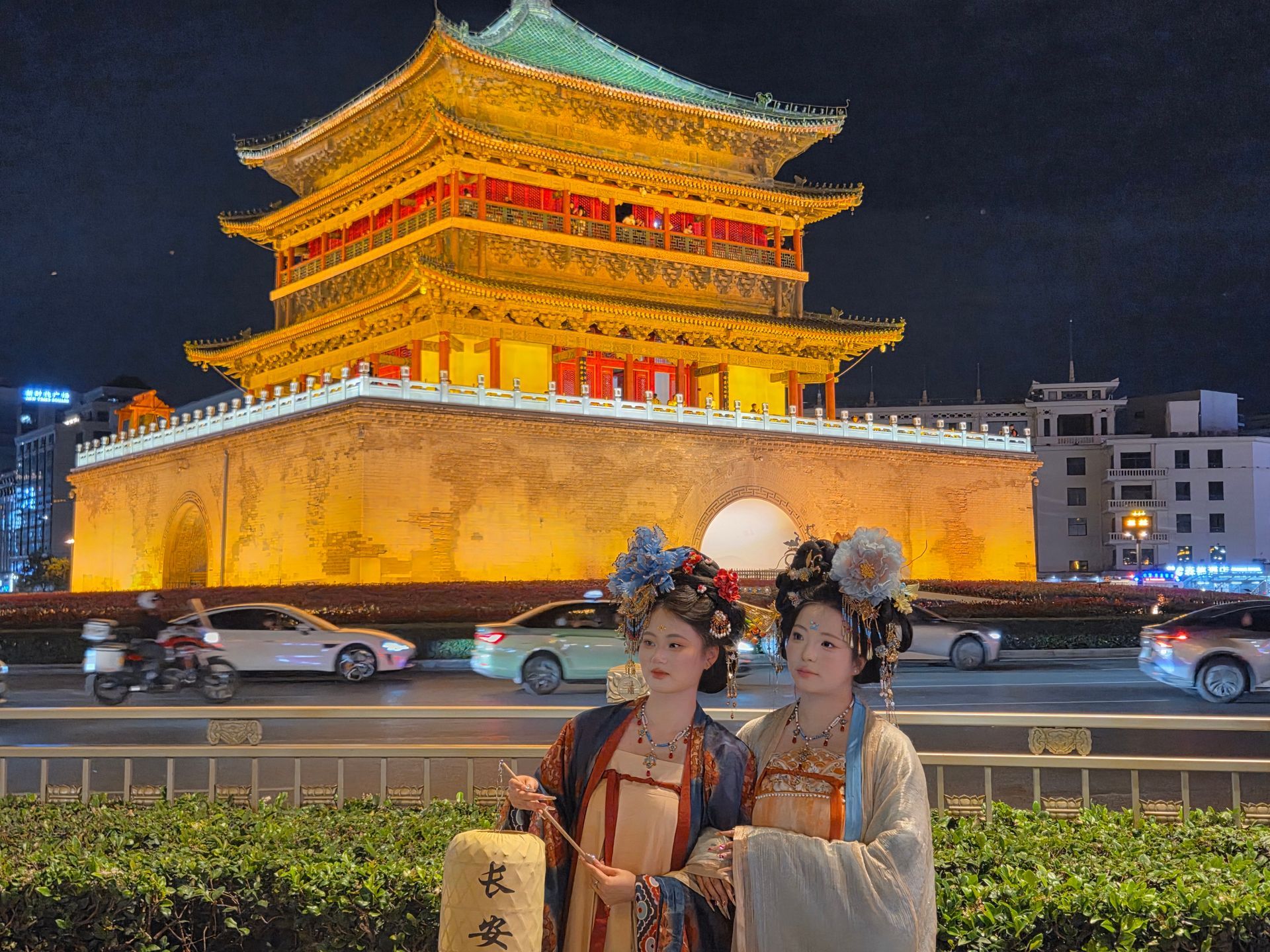
Our guided tour includes visits to the world-renowned Terracotta Warriors—thousands of life-sized statues buried with China’s first emperor—as well as the ancient city wall, the Drum and Bell Towers.
Xi'an is one of the oldest cities in China. Xi'an is one of China's Four Great Ancient Capitals. Luoyang, Nanjing and Beijing being the three others.
Xi'an is now the second-most popular tourist destination in China. The city was one of the terminal points on the Silk Road during the ancient and medieval eras, as well as the home of the 3rd-century BC Terracotta Army commissioned by Emperor Qin Shi Huang — both of which are listed as World Heritage Sites by UNESCO.
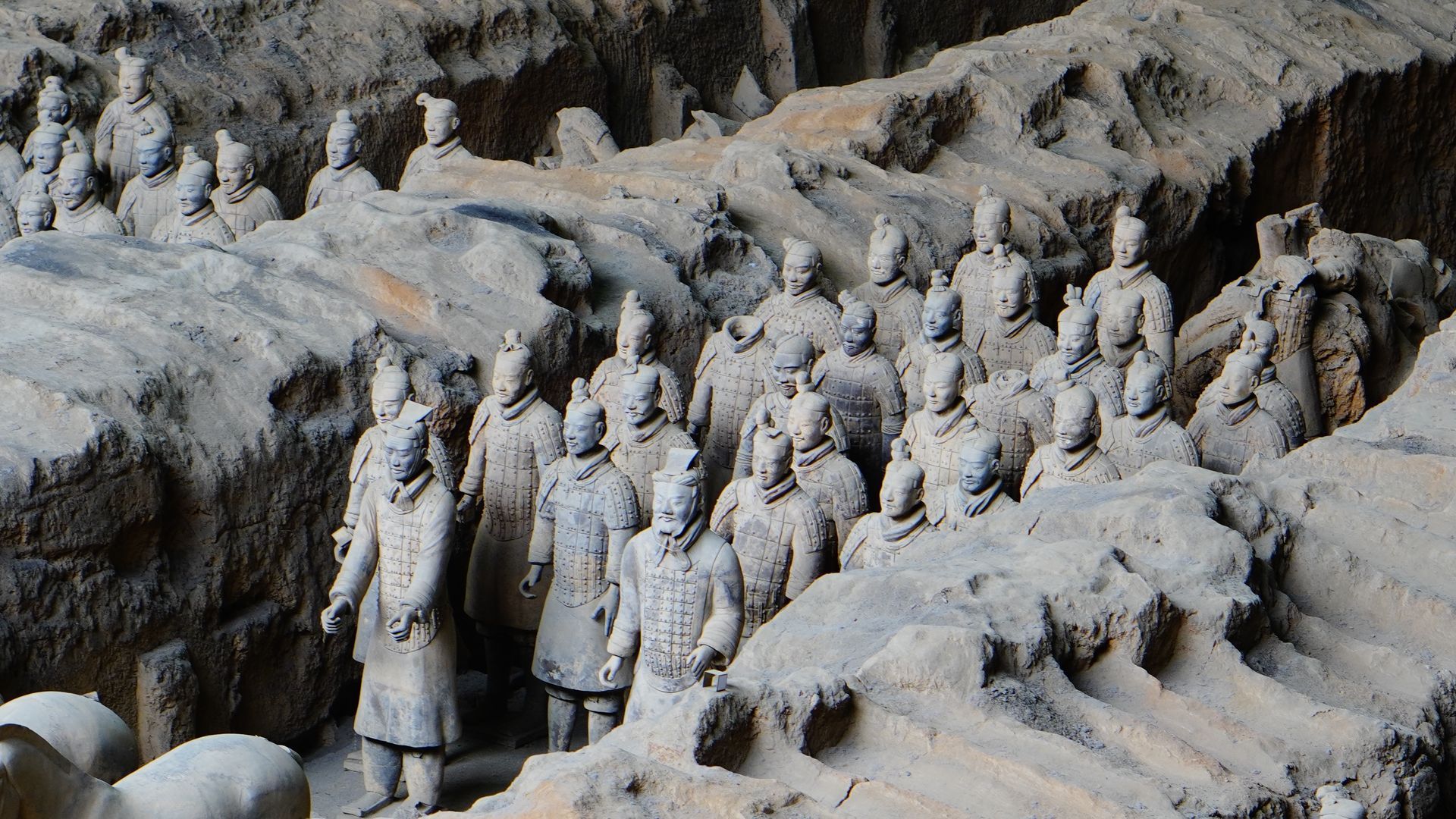
The Terracotta Army is a collection of terracotta sculptures depicting the armies of Qin Shi Huang, the first emperor of China. It is a form of funeral art buried with the emperor in 210–209 BCE in his mausoleum with the purpose of protecting him in his afterlife.
The figures, dating from approximately the late 200s BCE, were discovered in 1974 by local farmers one hour ride outside town. The figures vary in height according to their rank, the tallest being the generals. The figures include warriors, chariots and horses. Estimates from 2007 were that the three pits containing the Terracotta Army hold more than 8,000 soldiers, 130 chariots with 520 horses, and 150 cavalry horses, the majority of which remain in situ. Other, non-military terracotta figures have since been found in other pits, including those of officials, acrobats, strongmen, and musicians.

Day 20 / Xi'an to Pingyao (Central China)
Historic Banking Town & Traditional Courtyards
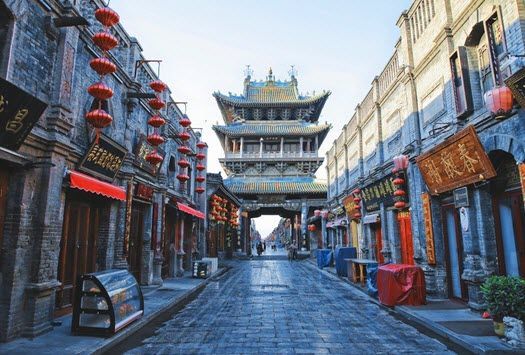
Today its all about the destination. We ride east on the motorway to Pingyao, one of China’s best-preserved ancient walled cities. Once a major financial center during the Qing Dynasty, Pingyao offers a rare glimpse into what traditional Chinese cities once looked like.
The atmosphere here is timeless, famously captured in the film “Raise the Red Lanterns.”.
In the evening there is free time to explore the old town and choose from a variety of local restaurants for dinner.
Pingyao Ancient City, a walled city famed for its importance in Chinese economic history and for its well-preserved Ming and Qing urban panning and architecture.
The town was founded in the 14th century AD and has been the seat of local government since at least the Qin. By the 16th century, it was a regional financial hub; some consider it to have been the financial centre of the Qing Empire in the late 19th century. The ancient city was built during the reign of King Xuan of Zhou (827-782 BC) and has a history of more than 2800 years. Outside town are the Zhenguo and Shuanglin Temples, Worl Heritage Sites since 1997.
Distance: Approx. 510 km
Altitude 1,350 meter

Day 21 / Pingyao to Datong (Ancient Capital - China)
Grotto Art & Great Wall Legacy
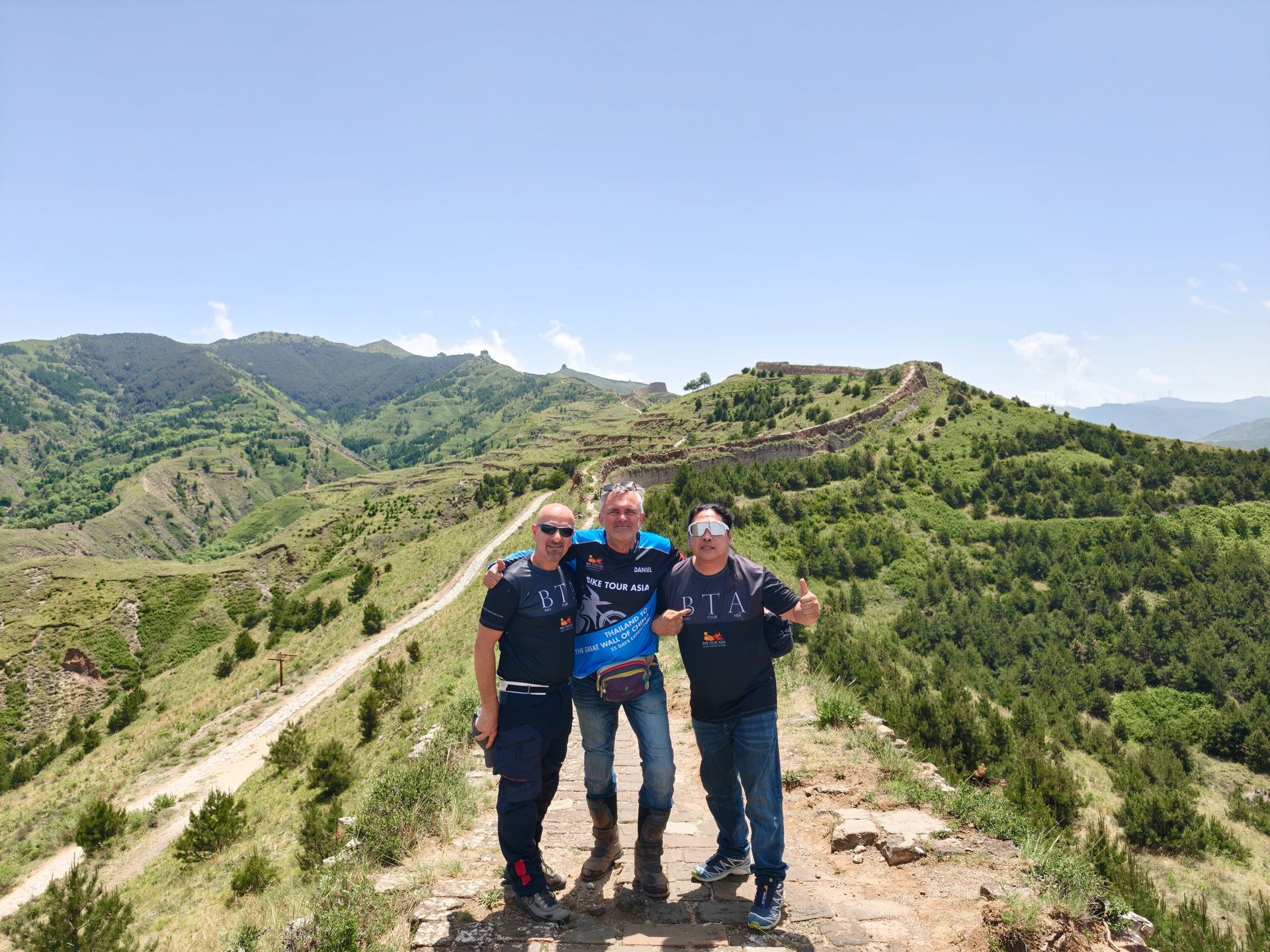
We start riding on the motorway to Guangwuming Great Wall Section. If weather is clear, it’s a great scenic walk up to the wall. There are hardly any tourists here.
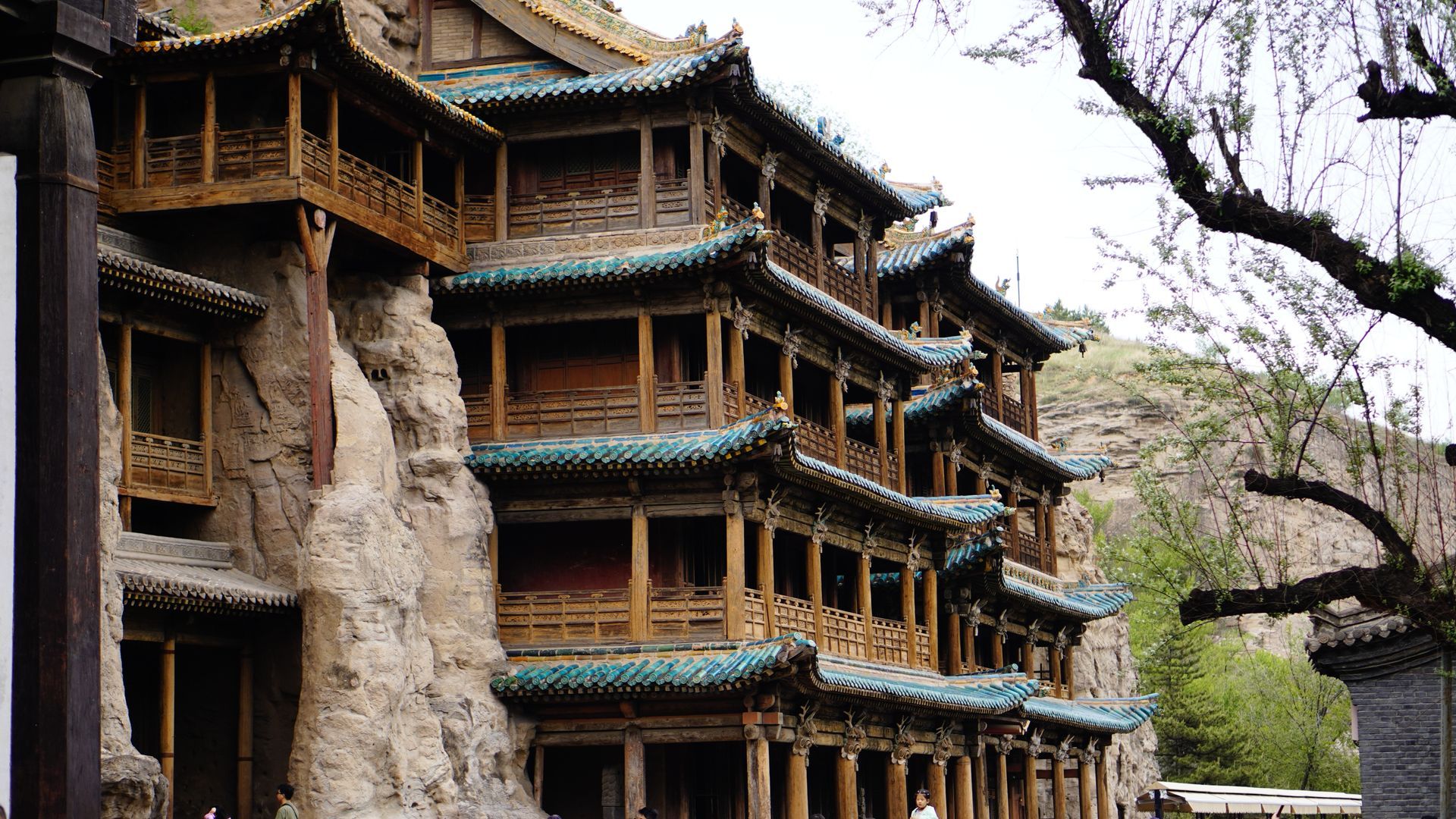
Our ride continues north to Datong, once a strategic frontier city guarding against Mongol invasions. Upon arrival, we visit the Yungang Grottoes—one of China’s four most famous Buddhist cave complexes. Carved into sandstone cliffs, these 1,500-year-old grottoes house over 50,000 statues and are a UNESCO World Heritage site.
Datong’s history as a Great Wall stronghold and cultural crossroads makes it a fitting stop as we edge closer to the tour’s final leg.
The Great Wall stretches from Hushan, Liaoning in the east to Jiayuguan Pass, Gansu in the west, with a total length of 8,851.8 kilometers. Its main structure is composed of Loess Rammed Earth Structure, with rammed layers 13-20 centimeters thick. The wall is approximately 10 meters high, topped with a one-meter-high parapet and crenels, and has a base width of 5-6 meters. Beacon towers were placed every 5 kilometers along the wall as military defense installations. The wall section employs a mixed construction technique using rammed earth and stacked stone.
Yungang Grottoes, are ancient Chinese Buddhist temple grottoes built during the Northern Wei dynasty. They are excellent examples of rock-cut architecture.
They are an outstanding example of the Chinese stone carvings from the 5th and 6th centuries. There are 53 major caves, along with 51,000 niches housing the same number of Buddha statues. Additionally, there are around 1,100 minor caves. A Ming dynasty-era fort is still located on top of the cliff housing the Yungang Grottoes.
The grottoes were excavated in the south face of a sandstone cliff about 2,600 feet long and 30 to 60 feet high. In 2001, the Yungang Grottoes were made a UNESCO World Heritage Site.
Distance: Approx. 400 km
Altitude 1,000 meter

Day 22 / Datong to The Great Wall
Final Ride to a World Wonder
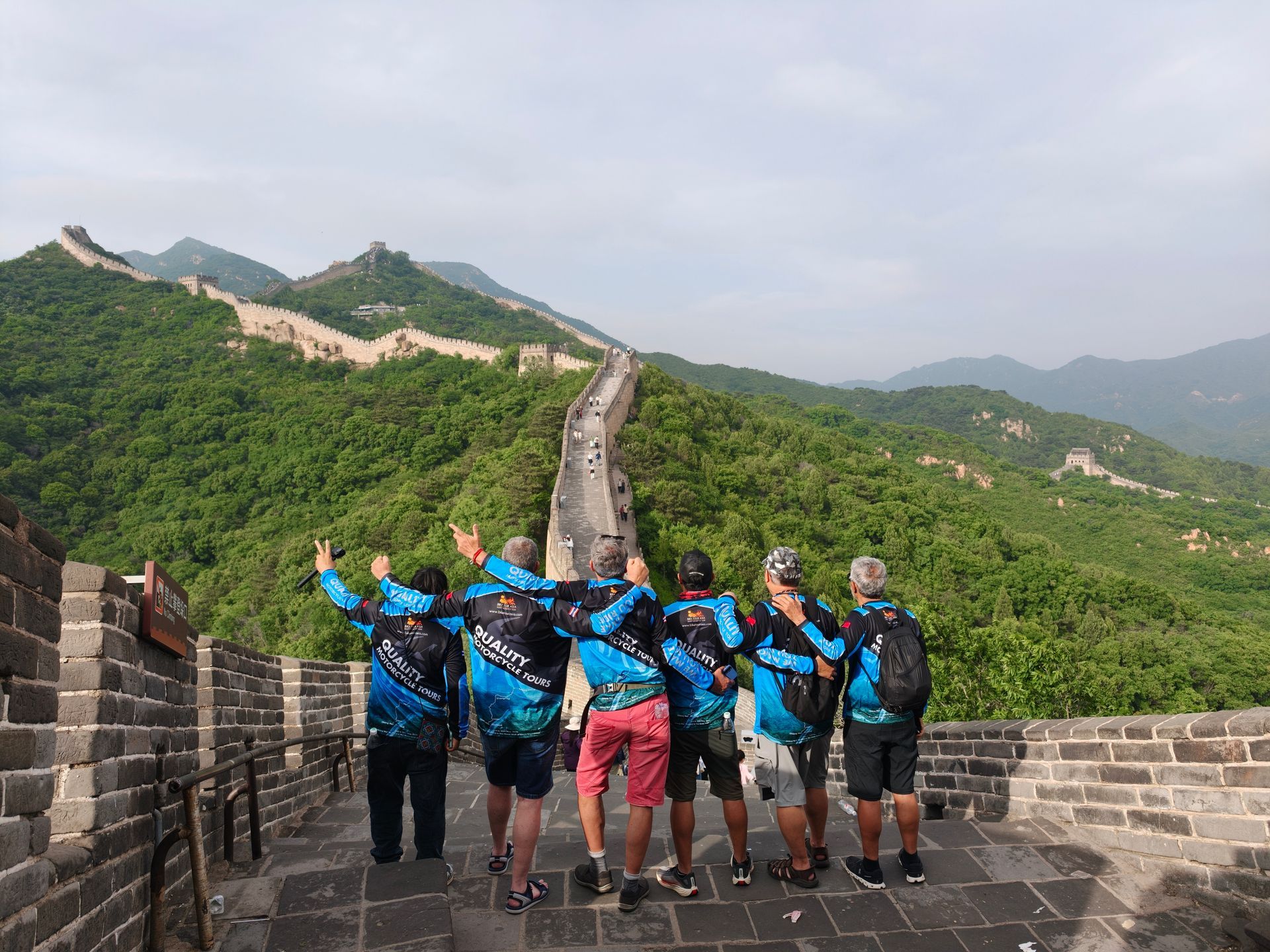
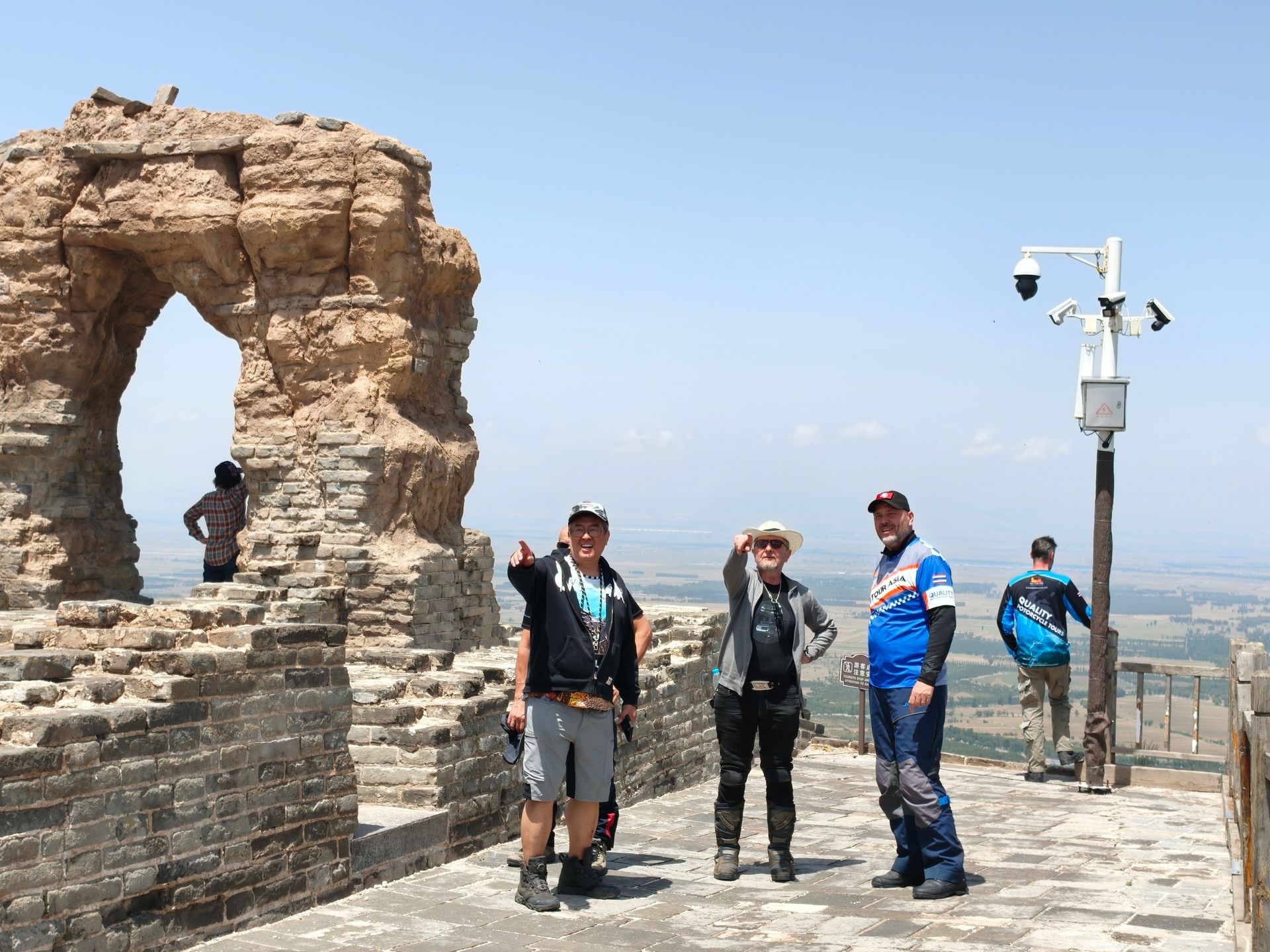
Today marks the final leg of our motorcycle journey as we ride north to reach the iconic Great Wall of China—one of the Seven Wonders of the World. We end the riding portion of our adventure at a scenic section of the Wall and stay overnight at a nearby hotel, right at its base.
In the morning we will visit an ancient section of the Great Wall. During the day we will ride along vallies following ridges consisting of remains of the great wall sections.
This evening, we’ll celebrate the completion of our incredible cross-border journey from Chiang Mai to the Great Wall with a farewell dinner and small party. After some 5,500 kilometers of riding across Southeast Asia and China, it’s time to toast to the road behind us and the memories made.
Following our arrival, the bikes will be loaded onto a flatbed trailer for transport, marking the end of the riding chapter but not the end of exploration, as tomorrow we walk along the Wall itself.
Great Wall of China is a UNESCO World Heritage Site, and was voted one of the New 7 Wonders of the World in 2007. Today, the defensive system of the Great Wall is recognized as one of the most impressive architectural feats in history.
Check in the hotel.
Organize your luggage out from the bikes.
Trailer will be loading bikes at hotel next morning.
Distance: Approx. 340 km

Day 23 / Great Wall to Beijing (China)
Final Exploration & Farewell to the Road
This morning, we explore the Great Wall on foot. You can choose to hike up to the watchtowers or take a cable car for easier access—either way, the views and scale of this ancient structure are unforgettable.
Our base plan is to take the cable car up to the Great Wall and walk down to the base station where our bus will bring us back to our hotel. (Entrance fee, 45 CNY, Cable Car, one way, 100 CNY.
In the afternoon, we transfer by bus to Beijing. It’s here that we say goodbye to our motorcycles and local guide. Our great adventure on two wheels will stop here, but our exploration on foot will begin.
Overnight in Beijing.

Day 24 / Beijing (Cultural visits)
Imperial Sights & Final Impressions
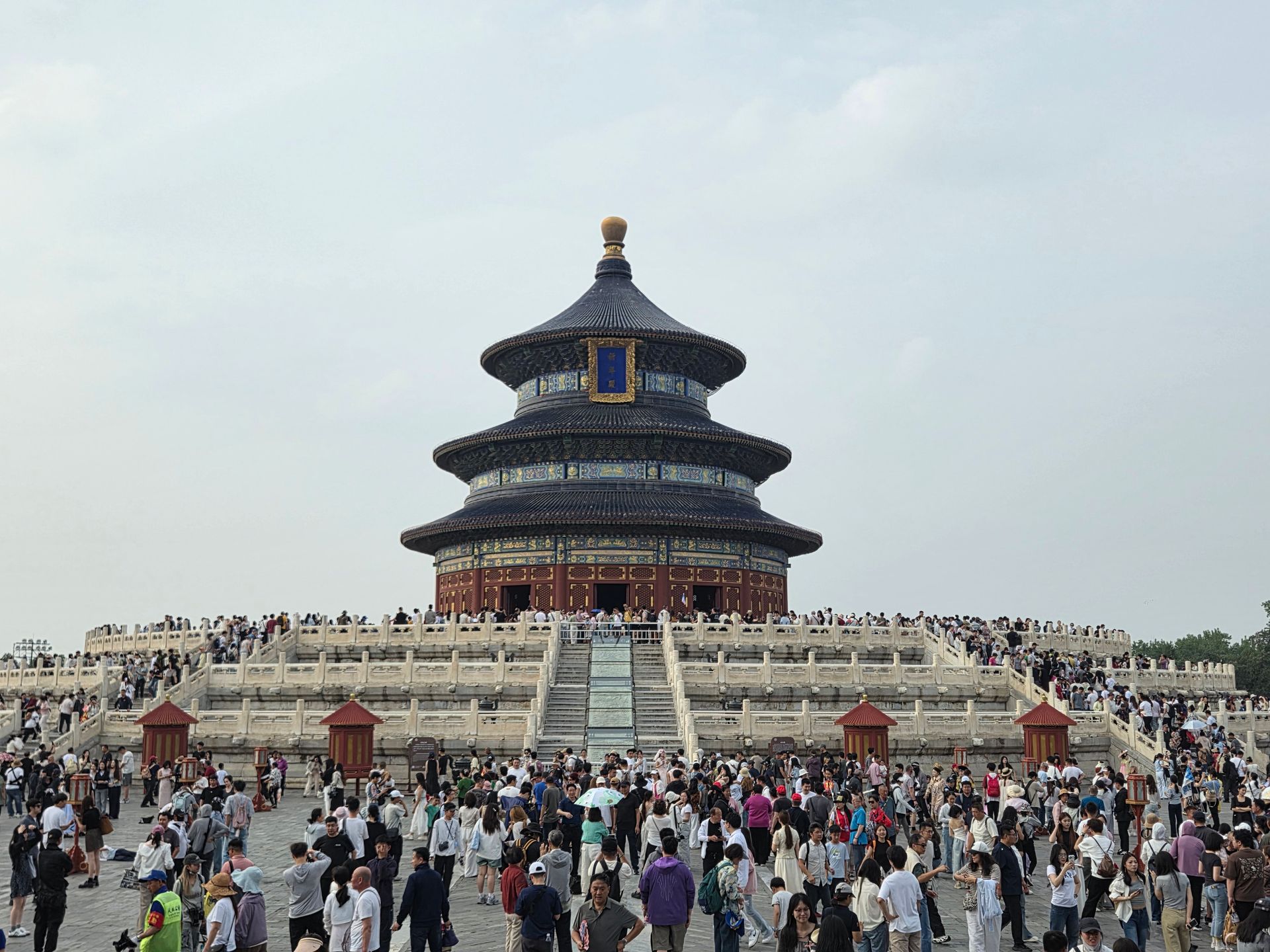
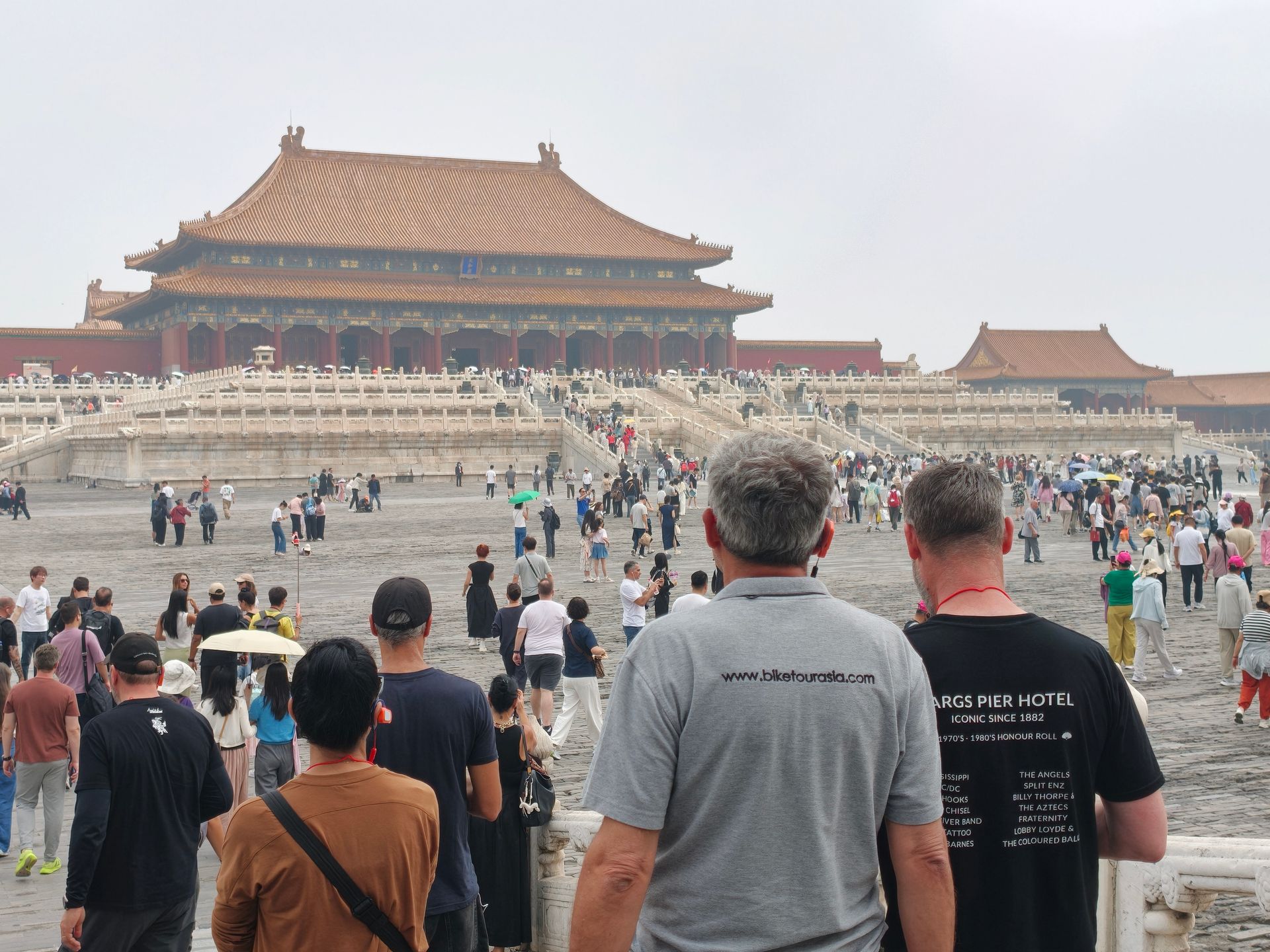
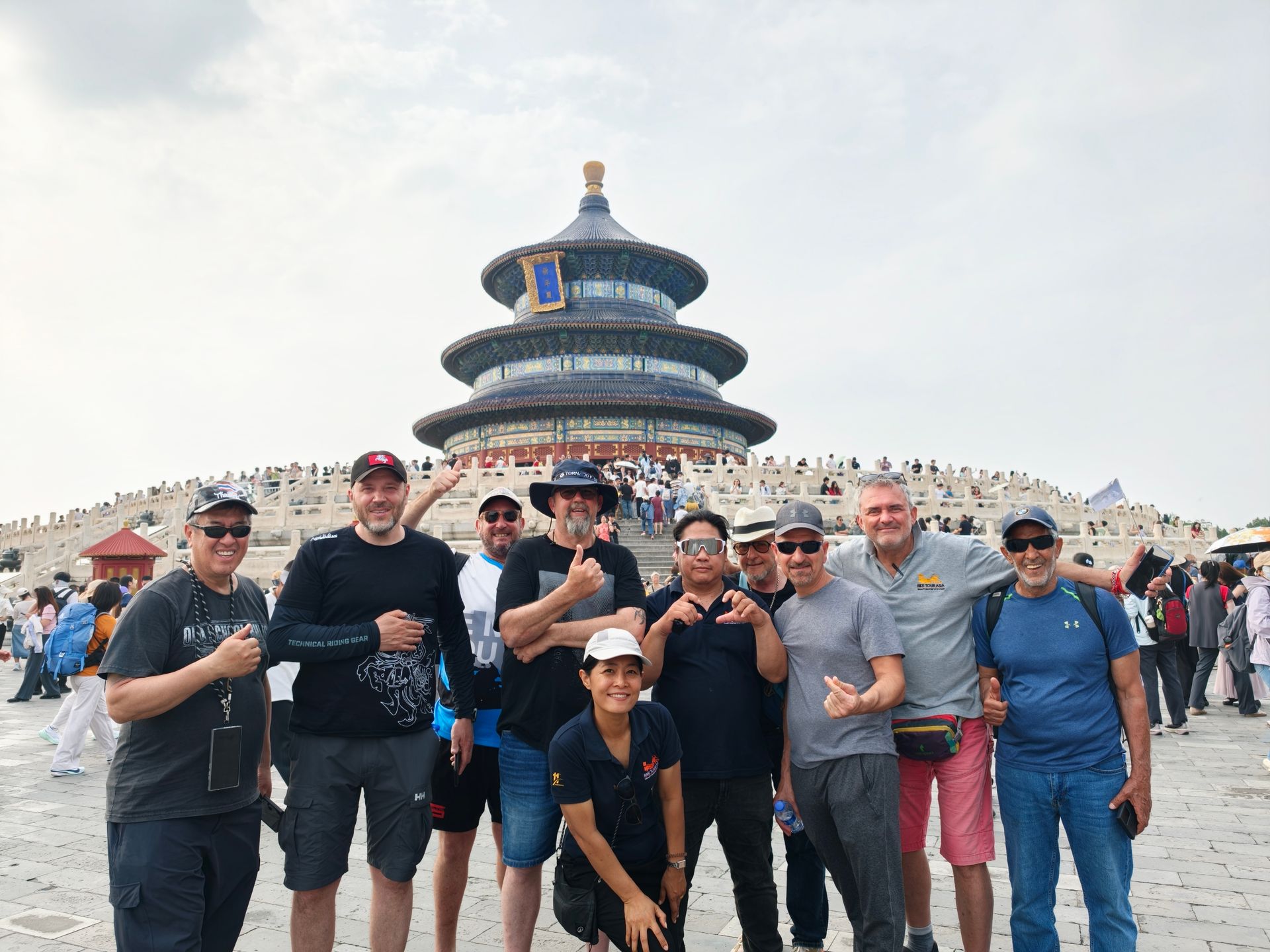
Today is yours to explore Beijing’s cultural landmarks. Guided visit to iconic sites such as the Forbidden City, Temple of Heaven and Tiananmen square, each offering a glimpse into China’s imperial past and architectural grandeur.
We stay overnight in Beijing, with time to reflect on the incredible journey from Southeast Asia to the heart of China. Overnight Beijing
Beijing is home to many national monuments and museums and has eight UNESCO World Heritage Sites —the Forbidden City, Temple of Heaven, Summer Palace, Ming Tombs, Zhoukoudian Peking Man Site, Beijing Central Axis and parts of the Great Wall and the Grand Canal. The city's traditional housing style, and hutongs, the narrow alleys between siheyuans, are major tourist attractions and are common in urban Beijing.
Alt. 800 Warm 26℃

Day 25 / Departure and onwards from Beijing
Farewell & Journey Onward
Enjoy a relaxed morning in Beijing before checking out and continuing your onward travel or flight home.
We hope the friendships, experiences, and memories forged on this epic journey will stay with you for a lifetime. Thank you for riding with us.
Tour Gallery
PRICES
All prices in USD.
| *Single Rider (shared twin room) | Pillion Passenger (sharing room) | Single Room (supplement charge) | |
|---|---|---|---|
| Honda NX500 Triumph Tiger Sport 660 | 11,765 | 4,700 | 1,200 |
| Triumph Tiger 900 GT Pro BMW F900 GS | 13,375 | 4,700 | 1,200 |
| BMW R1250 GS BMW R1300 GS | 14,985 | 4,700 | 1,200 |
NOTES:
- * Shared twin room
- A deposit of USD 1,000,- per is payable upon booking. Rest payment is due the latest 60 days before departure.
- Motorcycle Damage Liability & Rental Agreement acceptance required upon handover of the motorcycle (see “Terms & Conditions”).
- The price for a single rider in a sharing room requires another single rider booking with the same request in your group
- We are pleased to assist you with booking of additional nights in Chiang Mai / Beijing or any other services in connection with the tour
- Due to permits, the tour closes 45 days prior to departure. For later bookings please contact info@biketourasia.com
- Cancellation: If Bike Tour Asia must cancel (e.g., permits or minimum rider numbers not met), your deposit is fully refundable or transferable to another tour.
Inclusions / Exclusions
- Airport / Hotel / Bike Tour Asia transfers in Chiang Mai on arrival / departure date.
- 24 nights at carefully selected quality hotels and resorts with leisure facilities
- 17 Lunches and 12 Dinners as per itinerary document
- Breakfast every day
- Late model Motorcycle rental with unlimited mileage
- KMZ navigation file, day by day itinerary.
- Panniers and top box, basic motorcycle crash protection bars etc.
- Tools & tire repair kits & service
- Support vehicle with driver and English-speaking licensed tour guide, including all related costs.
- Bike Tour Asia tour leader on own motorcycle
- Transfer of luggage in support truck
- Motorcycle custom and Immigration documentation and charges leaving Thailand.
- Lao Permit, all related expenses including tour guide, additional support vehicle, tourist police, third party liability insurance (according to legal requirement) etc.
- China and Tibet Permit, all related expenses including tour guide, additional support vehicle, tourist police, third party liability insurance (according to legal requirement) etc.
- Return freight of motorcycle from Beijing to Chiang Mai
- Tour description, as per this document, day by day itinerary, highlights, points of interest, emergency numbers etc.
- Administrative and documentation cost prior / during and after the tour
- Guest immigration, Lao visa, 30-50 USD depending on nationality and Chinese visa.
- Flights
- Entrance fees to national parks and historical sites
- Fuel for your motorcycle
- Personal Items, gifts, snacks, etc.
- Special activities (rafting, fishing, etc.)
- Alcohol
- Fully refundable motorcycle security deposit
- All services not mentioned as included and all items of a personal nature
BOOKINGS
Chiang Mai to The Great Wall of China - Booking Request
We will get back to you as soon as possible.
Please try again later.
Ask us here
We will get back to you as soon as possible.
Please try again later.
FLEXIBLE TOUR OPTIONS
Book this tour how you want!